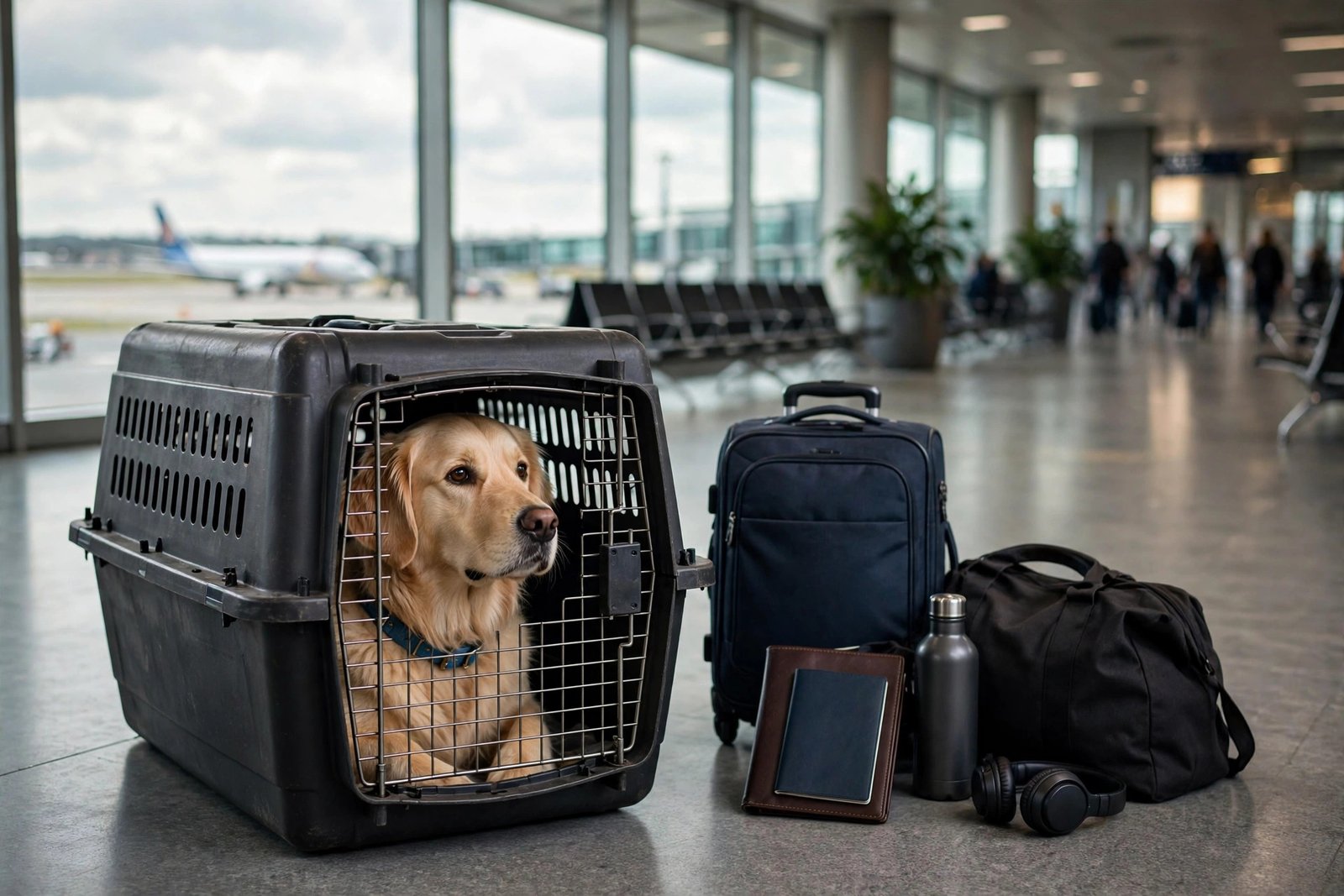
Moving abroad with your dog is absolutely doable — thousands of owners do it every year — but it is a bureaucratic obstacle course where one missed deadline can strand your dog in quarantine or, worse, on the wrong side of an ocean. The process takes 3 to 7 months of preparation depending on the destination. Start early, follow the sequence exactly, and your dog lands safely. Here is the complete roadmap.
Start With the Destination’s Rules (Months 6–7 Out)
Every country sets its own pet import rules, and they vary enormously. Rabies-free countries (UK, Ireland, Japan, Australia, New Zealand, Hawaii) have the strictest regimes: microchipping, rabies vaccination, blood titer tests with months-long waiting periods, and limited quarantine. The EU requires an EU pet passport or EU health certificate, microchip, and rabies vaccination with a 21-day wait. Some countries ban specific breeds outright. A few require import permits applied for months ahead.
Your authoritative sources: the destination country’s agriculture/quarantine authority website (not blogs — rules change), and the USDA APHIS pet travel pages for U.S. departures, which detail the export paperwork for every country. For U.S.-bound legs, check the CDC’s dog import requirements too — they tightened significantly and catch many travelers by surprise. Read all three, then build a timeline working backward from your flight date. The single most common disaster is discovering the 3-month titer waiting period two months before departure. The USDA APHIS pet travel center is the official starting point for every U.S. departure.
The Non-Negotiable Checklist
In order: ISO-compliant 15-digit microchip implanted before the rabies vaccine (the chip must be readable by the destination’s scanners, and it must predate the rabies shot or the shot does not count); current rabies vaccination (some countries require two, or specific vaccine types); rabies antibody titer test (FAVN) from an approved lab — for strict countries, drawn at least 30 days after vaccination, with a 3-month wait after a passing result before entry; parasite treatments (some countries require specific tapeworm or tick treatments within narrow pre-flight windows, like the UK’s 24–120 hour tapeworm rule); and the veterinary health certificate, endorsed by the USDA within 10 days of travel (sometimes 48 hours — check).
Timing traps: the titer test takes 3–4 weeks for results; the health certificate appointment must be with a USDA-accredited vet (not all vets are); USDA endorsement can take days by mail or same-day in person at regional offices — know which you are using. Keep copies of everything in three places: originals in your carry-on, photos on your phone, and scans in cloud storage. Paperwork problems cause more pet travel failures than any other factor.
Choosing How Your Dog Flies
Dogs fly three ways: in-cabin (under 20 pounds including carrier, on pet-friendly airlines, ~$100–$200), as checked baggage in the hold (~$200–$500), or as manifest cargo through a pet shipper ($1,000–$4,000+ internationally). Cargo hold travel is pressurized and temperature-controlled on modern aircraft — it is not the luggage compartment of nightmares — but brachycephalic (flat-faced) breeds face genuine breathing risks and many airlines restrict or ban them; check breed policies first.
Book direct flights whenever possible — every connection is a risk point for delays, heat exposure on tarmacs, and missed transfers. Fly at mild times of day in summer and winter; airlines embargo pet cargo above ~85°F and below ~20°F. Consider a professional pet relocation company for complex moves (Australia, Japan, multi-leg journeys): they cost $2,000–$6,000 but handle the paperwork labyrinth, bookings, and customs clearance. For simpler EU/UK moves, diligent DIY is very achievable. When you land, finding genuinely pet-friendly accommodation for the first nights takes one more stress off the arrival.
Costs: The Honest Total
Budget $1,500 to $6,000+ all-in for an international move with a dog. The line items: vet work and paperwork ($300–$800 — titer tests, health certs, USDA endorsement, treatments), crate ($100–$400 for an IATA-compliant crate — buy early and train the dog to love it), flight ($200–$2,000 depending on size and method), pet shipper if used ($2,000–$6,000), quarantine fees if applicable (Australia’s 10-day minimum runs ~$2,000), and destination-side costs (customs clearance, local registration, initial vet visit). Start a dedicated fund early — this is not a surprise to absorb, it is a project to finance. Careful planning of irregular big expenses is exactly what a reality-based budget is for.
Preparing the Dog (Not Just the Paperwork)
Crate training is the highest-value preparation: the dog will spend 8–20 hours in that crate, and a crate-trained dog sleeps through it while an untrained dog panics. Start months out — feed meals in the crate, build duration gradually, make it the best place in the house. Exercise the dog hard the day before travel. Attach a familiar-smelling blanket, a water bowl that attaches to the door, and clear labels: “LIVE ANIMAL,” your phone number, feeding instructions.
Do not sedate for flights unless your vet specifically recommends it for an individual dog — sedation impairs thermoregulation and balance at altitude, and most airlines and vets advise against it. Calming alternatives (Adaptil collars, vet-prescribed anti-anxiety medication for truly anxious dogs) are safer. Feed a light meal 4–6 hours before the flight, water normally. And prepare yourself: the separation is harder on owners than dogs. Most dogs emerge from cargo wiggly and oblivious; owners emerge from the terminal having aged visibly.
Arrival and Settling In
Have the arrival plan ready: who meets the dog at cargo/customs, transport to housing, and a vet appointment within the first week (many countries require local registration and some require follow-up treatments). Expect 1–2 weeks of adjustment weirdness — appetite changes, clinginess, house-training lapses, reverse jet lag. Keep routines consistent, explore the new neighborhood gradually, and give it time. Dogs are remarkably adaptable; most settle faster than their owners.
Research the destination’s dog life before you go: leash laws, off-leash areas, breed-specific rules, local hazards (new parasites, toxic plants, extreme heat protocols), and pet insurance availability. Join expat pet-owner groups for the destination — they are goldmines of practical knowledge (which vets speak English, where to buy familiar food, how the local dog culture works).
Conclusion
Moving abroad with your dog takes 3–7 months of preparation: learn the destination’s rules first, then execute the microchip → rabies → titer → treatments → health certificate sequence on schedule, choose the safest flight routing, crate-train thoroughly, and budget $1,500–$6,000+. The paperwork is tedious but deterministic — follow the checklist and the dog arrives safely. Start the day you decide to move, not the month before.
Frequently Asked Questions
How far in advance should I start planning?
6–7 months for strict countries (UK, Japan, Australia — the titer waiting periods demand it); 3–4 months minimum for the EU and most other destinations. The rabies titer timeline is the long pole — start there.
Can my dog fly in the cabin internationally?
Only small dogs (usually under ~20 lbs including carrier) on airlines that allow it, and policies vary by route — some airlines ban in-cabin pets on long-haul international flights. Confirm with the specific airline for your exact route.
Is it safe for dogs to fly in cargo?
On modern aircraft, the pet cargo hold is pressurized and climate-controlled, and millions of pets fly safely yearly. Risks concentrate in extreme weather, brachycephalic breeds, and connections — mitigate with direct flights and mild-weather timing.
Should I sedate my dog for the flight?
Generally no — sedation impairs temperature regulation and balance, increasing risk. Most vets and airlines advise against it. Discuss vet-prescribed anti-anxiety options if your dog is severely anxious.
What is the hardest country to bring a dog to?
Australia and New Zealand are the toughest: long titer waits, import permits, mandatory quarantine (10+ days, ~$2,000), and strict inspections. Japan and the UK are demanding but manageable. The EU is straightforward by comparison.