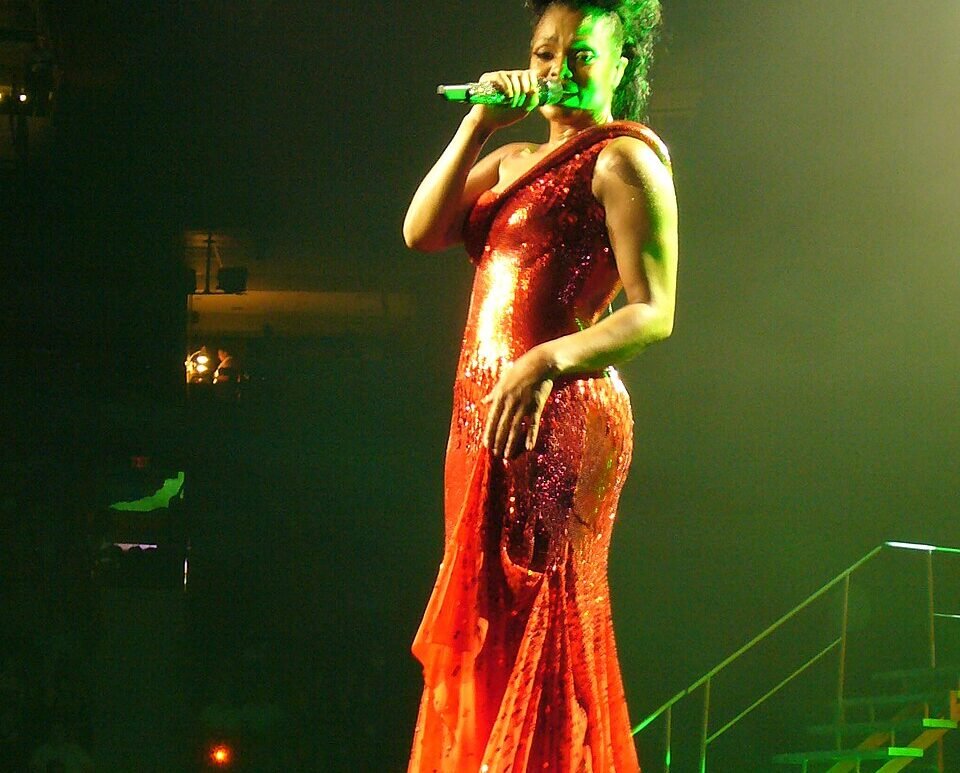
Janet Jackson’s $180 Million: Control, Catalogues and the Billionaire Myth That Never Held
The Short Version
Janet Jackson spent a decade escaping the most famous surname in pop and then out-earned almost everyone who doubted she could. Celebrity Net Worth puts her fortune at $180 million. An older Forbes estimate, from 2017, counted $150 million, and this profile prints both figures with their dates. A louder claim also circulates — that she counts as a billionaire — and Celebrity Net Worth itself dismantles that claim, tracing it to a 2013 Variety figure of roughly $1.2 billion in gross career activity that nobody should read as personal wealth. She is 60, she holds no publicly confirmed current partner, and she raises one son, Eissa. The youngest of ten Jackson children built the family’s second-greatest solo fortune by taking creative control early and keeping ownership close ever since.
How They Got There
1982–1985: The Family Business and Two Quiet Albums
Jackson entered entertainment as a child actor, playing Penny on the sitcom Good Times and joining the cast of Diff’rent Strokes and Fame. Her father Joe managed her early recording career, and A&M released her first two albums, Janet Jackson (1982) and Dream Street (1984), to modest results. The records sold respectably and established nothing distinctive — she sounded like a Jackson, and the market already had several. The important event of those years ran behind the scenes: she watched how contracts, management and family authority interacted, and she decided to change all three. Few fortunes in this series trace back to a decision as clearly as hers traces to the one she took at nineteen.
1986–1992: Control Changes Everything
Jackson fired her father as manager, moved to Minneapolis, and recorded Control (1986) with producers Jimmy Jam and Terry Lewis. The album sold more than ten million copies worldwide and produced five major American hits, including “What Have You Done for Me Lately,” “Nasty” and “When I Think of You.” Rhythm Nation 1814 (1989) went further: a socially conscious dance record that produced seven top-five singles in America, a record at the time, and anchored a tour that grossed heavily. She signed with Virgin Records in 1991 in a deal newspapers valued between $32 million and $50 million — a contract value, reported as such, and a signal that the industry now priced her beside her brother. She also acted, taking the lead in John Singleton’s Poetic Justice (1993) just beyond this window’s edge.
1993–2000: janet., The Velvet Rope and the Peak Years
The album janet. (1993) sold more than fourteen million copies worldwide and produced “That’s the Way Love Goes” and the ballad “Again,” which earned an Academy Award nomination from the film Poetic Justice. She renewed her Virgin contract in 1996 in a deal reported at $80 million, briefly the largest recording contract anyone had signed — again, a contract value across future albums, not a single payment. The Velvet Rope (1997) deepened her writing on identity and depression and produced “Together Again,” one of her biggest global hits. She toured relentlessly through the decade, and her stage productions set the template — dancers, staging, precision — that a generation of pop performers studied. Film work continued with Nutty Professor II: The Klumps (2000). By 2000 she had sold more than 100 million records worldwide across her career.
2001–Today: All for You, the Later Albums and the Residency Era
All for You (2001) debuted at number one and produced another signature title track. Later albums — Damita Jo (2004), 20 Y.O. (2006), Discipline (2008) — sold below her peak as the industry shifted around her, and the 2004 Super Bowl halftime incident with Justin Timberlake triggered a broadcasting backlash that cost her airplay and invitations for years, a penalty her collaborator largely escaped. She returned to acting in Tyler Perry films, published a bestselling book, True You (2011), and released Unbreakable (2015), her eleventh studio album and her seventh American number one. Las Vegas residencies and the Together Again tour, which ran through 2023 and 2024 to strong grosses, restored her live income at scale. She continues to tour selectively, and her catalogue streams steadily — the modern, quiet engine under the fortune.
Where It Began
Janet Damita Jo Jackson arrived on May 16, 1966, in Gary, Indiana, the youngest of ten children. Her father, Joseph Jackson, worked as a crane operator and then managed his sons’ group, the Jackson 5, with famous intensity. Her mother, Katherine Jackson, held the household together and remains the family’s centre. The family moved to Los Angeles as the Jackson 5’s Motown career ignited, and Janet grew up watching fame operate at close range — the money, the discipline and the cost. Her siblings include Michael, who died in 2009, and Tito, who died in September 2024; she stands as the youngest of the ten and the last Jackson sibling to build a solo career of the first rank. She performed on stage with her brothers from age seven and took television roles through her teens, an apprenticeship inside the family business that taught her both the craft and the contract lessons she later applied.
The Fortune in Full
Celebrity Net Worth sets Jackson’s fortune at $180 million. Forbes estimated $150 million in 2017, and this profile carries that older figure as a dated comparison rather than a rival headline. The billionaire claim needs direct handling because it still circulates: a 2013 Variety report totalled roughly $1.2 billion in gross economic activity across her career — records, tours, films and merchandise moving through the whole industry — and later writers converted that gross activity into a personal net worth it never described. Celebrity Net Worth debunks the conversion explicitly, and this profile follows that correction: gross activity counts money that passed through hundreds of hands, while net worth counts what one person kept.
What she kept rests on identifiable pillars. Her recording contracts ranked among the largest of the 1990s. Her tours grossed at stadium and arena scale across four decades. Her catalogue — she co-wrote most of her hits with Jam and Lewis — generates publishing income that one-off performers never see. Film salaries, the bestselling book and residency fees add smaller layers. Against the total stand the ordinary costs of a forty-year career and a well-documented generosity toward family. The $180 million figure reflects a fortune built on ownership and longevity rather than any single deal, which explains its durability: catalogue income does not retire.
Her influence compounds the catalogue’s value in ways accountants struggle to price. Beyoncé, Britney Spears, Rihanna and a generation of choreographers cite Jackson’s Rhythm Nation era — the militarised choreography, the industrial staging, the social subject matter inside dance records — as foundational study material, and every tribute performance renews attention on the original recordings. The Rock and Roll Hall of Fame inducted her in 2019, the NAACP and GLAAD honoured her humanitarian work across decades, and her 2018 Billboard Icon Award performance reminded the industry that her stagecraft remained intact at fifty-two. Influence of that depth keeps a catalogue culturally current, and cultural currency is what turns forty-year-old recordings into reliable streaming income rather than nostalgia curiosities.
Life Away from the Job
Jackson holds no publicly confirmed current partner, and this profile states that plainly. Her marriages run three: to singer James DeBarge in the mid-1980s, a union the courts annulled; to dancer and director René Elizondo Jr., whom she married in 1991 and divorced in 2000; and to businessman Wissam Al Mana, whom she married in 2012 and separated from in 2017. She dated producer Jermaine Dupri from 2002 to 2009. She counts one child: her son Eissa, who arrived in January 2017 during the Al Mana marriage. Her parents, Joseph and Katherine Jackson, anchor the beginnings section above, and her siblings — nine older brothers and sisters, including Michael and Tito, both deceased — form the famous constellation she spent a career stepping out of and, in later years, honouring on stage. Her brother Michael Jackson’s net worth profile covers the family’s larger fortune and its complicated estate.
Jackson guards her son’s privacy with the same discipline she applies to her own life between album cycles. She has spoken about motherhood arriving at fifty as a deliberate joy, and she structures touring around him. The privacy pattern runs through her whole biography — secret marriages, quiet divorces, long public silences — and it also protects the business: with no lifestyle spectacle to sell, coverage returns to the catalogue and the stage show, the two assets that pay her. Fellow performers cite her as a template for exactly that reason. She demonstrated that a woman from a famous family could seize creative control at nineteen, out-negotiate the industry at twenty-five, and still hold the catalogue at sixty.
The Jackson family story shadows every account of her life, and she handles it with a loyalty that never wavers in public. She defended Michael through his trials during his life, she performs tributes to him on tour, and she speaks of Katherine, her mother, as the family’s moral centre and her own. The family’s finances produced headlines for decades — estates, debts, disputes among siblings — and Janet’s name attaches to none of the chaos. She kept her business structures separate, her management professional after the Control decision, and her personal spending out of the tabloids. Observers who study why her fortune survived while others in the family fractured usually land on that 1986 decision: she took control early, hired outsiders, and never handed the keys back to the family firm.
And Finally
Jackson at 60 holds a secure and unusual position: a catalogue that pays continuously, a live show that still sells arenas and residencies, a son she raises on her own terms, and a reputation that younger stars actively study and openly borrow from. The Together Again tour proved the demand survived every industry shift, and her Rock and Roll Hall of Fame induction in 2019 formalised the standing the sales figures had argued for decades.
The fortune deserves its accurate frame. Not a billion, never a billion — $180 million by Celebrity Net Worth’s count, $150 million by Forbes’s older one, built from ownership, writing credits and forty years of stagecraft. In a family that produced pop’s biggest fortune and some of its saddest money stories, hers may be the most professionally constructed of all.
The Scoop File
| The Scoop File | Details |
|---|---|
| Born | May 16, 1966, Gary, Indiana |
| Age | 60 |
| Height | 5 ft 4 in |
| Net Worth | $180 million (Celebrity Net Worth); Forbes estimated $150 million in 2017 |
| Weight | No reliable published figure exists |
| Partner | No publicly confirmed current partner |
| Children | Eissa (born January 2017) |
| Parents | Joseph Jackson and Katherine Jackson |
| Siblings | Youngest of ten Jackson children, including Michael (died 2009) and Tito (died September 2024) |
| @janetjackson |