The most common haircut regret has a pattern: the cut looked incredible on someone else. Same stylist skill, same photo reference, completely different result — because the missing variable was face shape. A haircut that elongates a round face can make a long face look longer; layers that soften a square jaw can overwhelm a delicate heart-shaped face. Stylists think in terms of balance and proportion, not trends, and once you understand the small amount of geometry involved, you can walk into any salon and ask for what actually flatters you instead of hoping for the best.
This guide covers how to determine your face shape accurately, what each shape needs from a haircut, the specific cuts that flatter each shape (and the ones to avoid), how features like forehead size and jaw width refine the choice, and exactly what to tell your stylist so you leave happy.
How to Determine Your Face Shape
Pull your hair completely back, look straight into a mirror, and trace the outline of your face — or take a straight-on photo and trace it. You’re looking for the overall silhouette and where the width sits. The six shapes that cover nearly everyone: oval (length about 1.5x width, gently rounded), round (width and length nearly equal, soft angles), square (strong jaw, forehead and jaw similar width), heart (wide forehead narrowing to a pointed chin), diamond (narrow forehead and jaw, wide cheekbones), and oblong/rectangular (long with straighter sides).
Measure if you’re unsure: forehead width, cheekbone width, jawline width, and face length. Round faces have similar measurements across all four; oblong faces have a length clearly exceeding the widths; heart shapes have a forehead wider than the jawline. Most people are a blend of two shapes — that’s normal, and it just means borrowing principles from both. The goal isn’t a perfect label; it’s knowing whether your face needs lengthening, softening, widening, or balancing.
The Core Principle: Balance and Contrast
Every flattering haircut does one of two things: it balances proportions or it accentuates a strong feature intentionally. Round faces benefit from height and angles that create the illusion of length — the opposite of adding width at the cheeks. Square faces benefit from softness around the jaw — texture and layers that break up strong angles. Long faces benefit from width — volume at the sides that shortens the visual length. Heart faces benefit from fullness at the jawline to balance a wider forehead. This is the same logic behind choosing sunglasses for your face shape — contrast flatters, echo exaggerates.
Features refine the formula further. A high forehead pairs well with bangs or a deep side part that breaks up the expanse; a strong jaw softens with face-framing layers rather than blunt cuts that end right at the jawline; a pointed chin balances with volume at the sides rather than at the crown. Bring these observations to your stylist — “I want to soften my jaw” is more useful than any celebrity photo.
Best Haircuts for Each Face Shape
Oval faces: the versatile shape
Oval is the most forgiving shape — balanced proportions mean most cuts work. The main caution is avoiding excessive length without layers, which can drag an oval face longer, and avoiding heavy straight-across bangs that shorten it. Almost everything else — bobs, lobs, pixies, long layers — is fair game. If you have an oval face, choose based on hair texture and lifestyle rather than geometry.
Round faces: create length and angles
Go for height at the crown, long layers, and cuts that fall below the chin — lobs, long layered cuts, and pixies with volume on top all elongate. Side parts beat center parts (which emphasize symmetry and width). Avoid chin-length bobs with rounded edges and blunt cuts that end at the cheek — they mirror the face’s roundness instead of contrasting it. Angled bobs that are shorter in back and longer in front work beautifully.
Square faces: soften the angles
Texture is your best friend: wispy layers, soft waves, and face-framing pieces that start below the jaw break up strong angles. Side-swept bangs soften a broad forehead. Avoid blunt bobs that end exactly at the jawline and straight-across heavy bangs, which emphasize squareness. Long, layered cuts with movement are the safest universally flattering option.
Heart faces: balance the forehead
Add fullness where the face narrows: chin-length bobs, shoulder-length cuts with waves at the ends, and side-swept bangs that camouflage a wide forehead. Avoid short crops with volume concentrated at the crown, which exaggerate the forehead-to-chin imbalance, and severe center parts that draw the eye upward.
Diamond and oblong faces
Diamond shapes — narrow at forehead and jaw, wide at cheeks — do well with styles that add width at the forehead and chin: textured bangs, chin-length bobs, and tucked-behind-the-ear styles that show off cheekbones without widening them further. Oblong faces need the opposite of round faces: width at the sides. Shoulder-length cuts with volume, curtain bangs, and waves add horizontal fullness; avoid long, flat, one-length hair and excessive crown height, which both lengthen further.
What to Tell Your Stylist
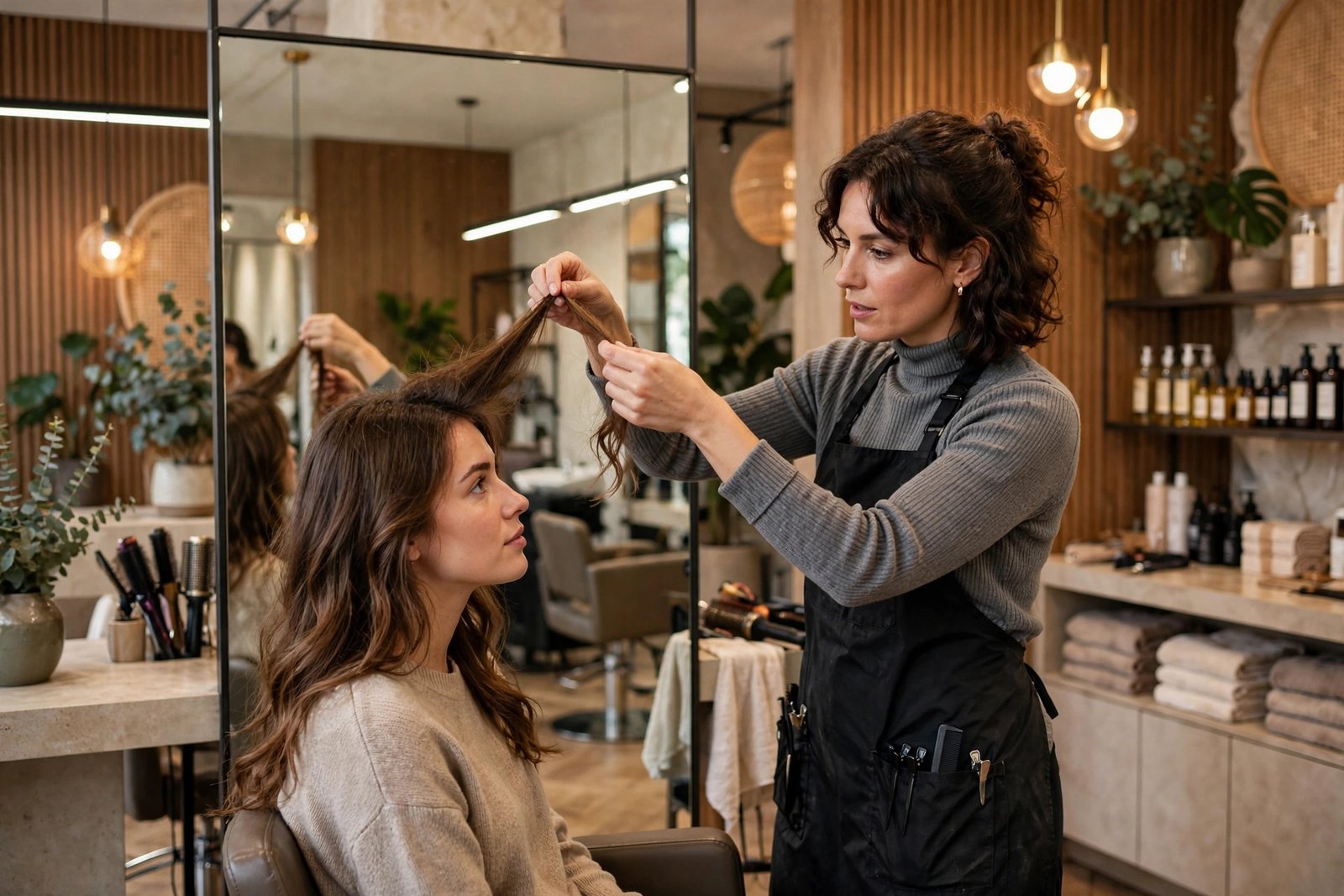
Photos help, but choose references with a similar face shape to yours — a cut on an oval face won’t translate to a square one. Use the language stylists think in: “I want to elongate my face,” “soften my jawline,” “add volume at the sides,” “keep it off my forehead.” A great cut also depends on healthy hair — dermatologist-approved hair care basics keep any style looking its best between appointments, and the FDA’s cosmetics guidance helps you evaluate the styling products your stylist recommends. Mention your real routine honestly — a cut that needs 30 minutes of styling is the wrong cut if you have five. Ask what the cut will look like at eight weeks, not just day one; the best cuts grow out gracefully. And finding your personal style matters as much as geometry — the most “flattering” cut on paper fails if it doesn’t feel like you.
Frequently Asked Questions
Can I pull off bangs with my face shape?
Almost every face shape can wear some type of bang — it’s about the style. Curtain bangs flatter nearly everyone; wispy side-swept bangs suit square and heart faces; blunt straight bangs work best on oval and oblong faces. The bang style matters more than a yes/no rule.
Does short hair make a round face look rounder?
Not necessarily — a pixie with height and texture on top can elongate a round face beautifully. What makes round faces look rounder is short hair with volume concentrated at the sides (at cheek level). Keep the sides sleek and the top full.
How often should I get a trim to maintain the shape?
Short cuts every 4–6 weeks, medium cuts every 8–10, long layered cuts every 10–12. But the real test is the mirror: when the cut stops doing its balancing job — layers collapse, bangs hit the wrong spot — it’s time, regardless of the calendar.
Should men follow the same face-shape rules?
The geometry is identical. Men with square faces soften with textured tops and faded sides rather than boxy cuts; round faces gain definition from height and angular fringe; oblong faces avoid excessive height. Barbers use the same balance principles.
What if my face is between two shapes?
Most people are. Identify your dominant concern — is it width, length, jaw strength, or forehead? — and prioritize the principle that addresses it. A stylist consultation (many offer them free) is worth it for in-between cases.
The right haircut isn’t about following trends or copying a celebrity — it’s about understanding your own geometry and asking for balance: length where you need length, softness where you need softness, width where you need width. Determine your shape, learn its one core principle, communicate it clearly to your stylist, and you’ll stop gambling on haircuts and start collecting compliments on them.