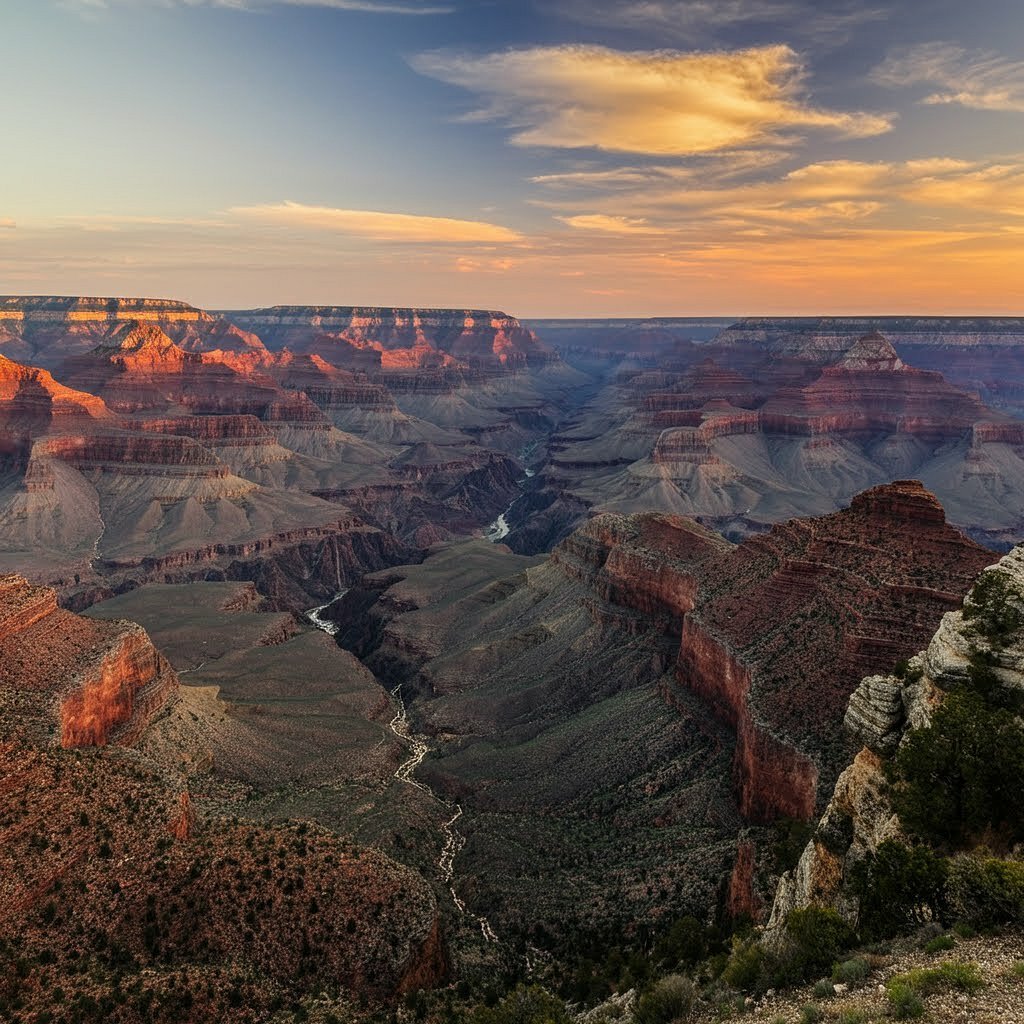
The Grand Canyon is one of those places that ruins photographs — not because it’s not photogenic, but because no image captures the scale. Standing on the rim for the first time genuinely silences people. But when you go shapes the experience enormously: 110°F summer crowds versus serene winter solitude are basically two different parks. So what is the best time of year to visit the Grand Canyon? It depends on what you want — but there’s a clear sweet spot most travelers should aim for.
The Short Answer: April–May and September–October
The shoulder seasons win for most visitors. Here’s why: daytime highs at the South Rim run 60–75°F (perfect for hiking and viewpoints), crowds are moderate, lodging is available without booking a year out, and the light — that famous canyon light — is at its best with lower sun angles. Spring brings wildflowers; fall brings golden cottonwoods and crisp air. If you can only pick one window, pick these months.
What Is the Best Time of Year to Visit the Grand Canyon? The Full Seasonal Breakdown
Spring (March–May): Excellent
- Weather: March can still be chilly (40s–50s, possible snow at the rim), but April–May is glorious — 60s–70s at the rim, warmer in the canyon.
- Crowds: Building through spring; May starts getting busy but manageable.
- Highlights: Wildflowers, waterfalls at full flow, comfortable hiking. The North Rim opens mid-May.
- Watch for: Unpredictable March weather — pack layers. Inner-canyon temperatures run 20–30°F hotter than the rim, always.
Summer (June–August): Crowded and hot
- Weather: South Rim highs 80s–90s; inner canyon regularly exceeds 110°F. Afternoon thunderstorms (monsoon season July–September) bring lightning danger.
- Crowds: Peak. Parking fills by 10 a.m., viewpoints are packed, lodging books out months ahead.
- Highlights: All facilities open, ranger programs in full swing, North Rim fully accessible.
- Watch for: Heat is genuinely dangerous below the rim — the NPS rescues hundreds of heat-illness hikers yearly. If you hike in summer: start before sunrise, carry a gallon of water per person, and never attempt rim-to-river-and-back in one day. The NPS Hike Smart guide is required reading.
Summer works if it’s your only option — just go in with a strategy: arrive at viewpoints for sunrise, retreat midday, return for sunset. The crowd-avoidance tactics for popular destinations apply here too.
Fall (September–November): Excellent
- Weather: September is warm perfection; October brings crisp 60s and fall color; November cools into the 50s with possible early snow.
- Crowds: Thin dramatically after Labor Day. October is many regulars’ favorite month.
- Highlights: Golden aspens and cottonwoods, clear skies, elk rutting season (spectacular and slightly alarming).
- Watch for: North Rim closes mid-October (services) — visit before then. Shorter days mean planning hikes around daylight.
Winter (December–February): Underrated solitude
- Weather: South Rim highs in the 40s, lows in the teens–20s, snow common. The canyon with snow is breathtaking — white rims, red rock, blue sky.
- Crowds: Minimal. You’ll have viewpoints nearly to yourself.
- Highlights: Serene, dramatic, cheap lodging, no reservations needed for most things.
- Watch for: Icy trails (bring traction devices), some facilities closed, North Rim closed entirely. But if you want the canyon without the crowds, winter delivers.
South Rim vs. North Rim: Timing Matters
The South Rim is open year-round and gets 90% of visitors. The North Rim — higher, cooler, wilder, with arguably better views — is only open mid-May through mid-October. If the North Rim is on your list, your window is set for you: late May through September, with September being ideal (fewer crowds, still open). The North Rim sees a tenth of the South Rim’s visitors — it’s the connoisseur’s choice.
Practical Timing Tips
- Book lodging 6+ months ahead for in-park stays (El Tovar, Bright Angel Lodge) in peak season — they sell out absurdly early. Gateway towns (Tusayan, Williams, Flagstaff) offer more flexibility.
- Time of day matters as much as season: Sunrise and sunset are when the canyon glows — midday light washes it flat. Plan viewpoints around golden hours.
- Check the NPS Grand Canyon trip planner before you go — road closures, shuttle schedules, and alerts change seasonally.
- Combine wisely: The canyon pairs beautifully with other underrated national parks in the region (Zion, Bryce, and the North Rim make a legendary loop).
3-Day Grand Canyon Itinerary (South Rim)
Three days is the sweet spot for a first visit — enough for the highlights without rushing:
- Day 1: Arrival + sunset. Arrive by afternoon, check in, walk the Rim Trail from the village toward Hermits Rest (flat, paved, stunning). Catch sunset at Hopi Point or Mohave Point — the canyon ignites. Dinner at El Tovar or the Arizona Room (reserve ahead).
- Day 2: Below the rim. Hike partway into the canyon — South Kaibab to Ooh Aah Point (1.8 miles round trip, 2 hours) for a taste, or to Cedar Ridge (3 miles) for the committed. Start at sunrise to beat heat and crowds. Afternoon: rest, visit the Yavapai Geology Museum, sunset at Yaki Point.
- Day 3: East side + departure. Drive Desert View Drive east — Grandview Point, Moran Point, Tusayan Ruin, and Desert View Watchtower. Each stop is 15–30 minutes; the whole drive is half a day of jaw-dropping overlooks. Exit via the east entrance toward Page or Flagstaff.
Keys to the trip: book in-park lodging 6+ months out (or stay in Tusayan), carry more water than seems reasonable, and do at least one sunrise — the canyon at dawn, empty and glowing, is the memory you’ll keep forever.
One More Thing: The Night Sky
Whatever season you visit, stay for the dark. The Grand Canyon is a designated International Dark Sky Park, and the Milky Way over a mile-deep canyon is a legitimate wonder — arguably as impressive as the canyon itself. The best viewing: new moon phases, summer for the galactic core, winter for crystalline clarity. The Yavapai Point and Desert View areas have minimal light pollution; ranger-led astronomy programs run in summer. Bring a red flashlight (preserves night vision), a warm layer (desert nights bite even in summer), and patience — your eyes need 20–30 minutes to fully adapt. It’s the rare attraction that’s completely free, never crowded at 2 a.m., and utterly unforgettable.
The Takeaway
The best time of year to visit the Grand Canyon is April–May or September–October for ideal weather and manageable crowds, with October and winter offering solitude for those who prefer it. Summer works with a heat-and-crowd strategy; the North Rim demands a mid-May to mid-October window. Whatever season you choose, go at sunrise at least once — watching light flood a mile-deep canyon while the crowds are still asleep is the experience the postcards can’t capture. Start with the NPS Grand Canyon site for current conditions and planning.