You crushed the workout. Now you can’t walk down stairs, your arms won’t straighten, and you’re wondering if this is fitness or a cry for help. Delayed onset muscle soreness (DOMS) peaks 24-72 hours after intense exercise, and while it’s a sign you challenged your muscles, being wrecked for four days isn’t a badge of honor — it’s poor recovery. If you’re wondering how do I recover faster after an intense workout, this guide gives you the straight, no-fluff answer.
Recovery isn’t passive. There’s a lot you can actively do to bounce back faster, and some popular methods are mostly marketing. Here’s what the evidence actually supports.
The Big Three: Sleep, Protein, and Hydration
Let’s start with the unsexy truth: the most powerful recovery tools are free. Sleep is when your body does its repair work — growth hormone peaks during deep sleep, driving muscle protein synthesis. Athletes who sleep under 7 hours recover measurably worse and get injured more. If you’re training hard and sleeping 6 hours, you’re leaving half your gains on the table. Prioritize 7-9 hours like it’s part of training, because it is. American College of Sports Medicine recovery resources
Protein timing is less critical than total intake, but getting 20-40g within a couple hours post-workout supports repair — and hitting your daily total (0.7-1g per pound) matters more than any magic window. Hydration rounds out the trio: even 2% dehydration impairs recovery and increases perceived soreness. Drink water steadily; your urine should be pale yellow.
- Sleep 7-9 hours: the #1 recovery tool — growth hormone and muscle repair peak in deep sleep.
- 20-40g protein post-workout: supports repair; daily total matters more than exact timing.
- Hydrate consistently: pale-yellow urine is the target; dehydration worsens soreness.
- Eat enough overall: recovery requires energy — chronic under-eating stalls it completely.
- Carbs post-workout: replenish glycogen, especially after endurance sessions.
Active Recovery: What to Do in the 48 Hours After
Complete rest isn’t optimal — light movement is. Active recovery (easy walking, light cycling, gentle swimming) increases blood flow to damaged muscles without adding stress, and studies show it reduces soreness more than sitting still. A 20-minute easy walk the day after leg day genuinely helps. Think ‘movement, not training’ — conversational pace, no strain.
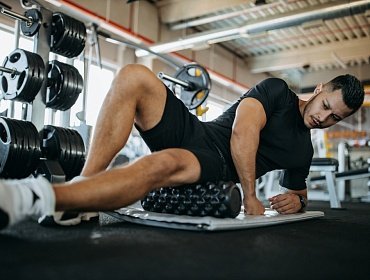
Foam rolling and massage have decent evidence for reducing perceived soreness, though the physiological mechanisms are debated. Ten minutes of foam rolling on sore muscles post-workout is worth doing. Stretching feels good but doesn’t reliably reduce DOMS — do it for mobility, not recovery magic. And respect the timeline: the same muscle group needs 48-72 hours before another hard session. National Strength and Conditioning Association resources
- Light movement beats bed rest: easy walking or cycling increases blood flow to sore muscles.
- Foam roll 10 minutes: reduces perceived soreness; focus on the worked muscles.
- Wait 48-72 hours: same muscle group needs real rest before another intense session.
- Alternate hard and easy days: structure your week so intense days are separated.
- Deload weeks matter: every 4-8 weeks, cut volume by half for a week to fully recover.
What’s Hype vs. What Helps (Cold Plunges, Supplements, Gadgets)
Cold water immersion does reduce soreness — but there’s a catch: regular ice baths may blunt muscle growth and strength gains. If your goal is performance next week, cold helps; if it’s building muscle long-term, skip the routine plunges. Contrast showers (hot/cold alternating) feel great with less downside. Compression garments show small benefits for soreness; they’re not transformative.
Supplements: creatine and tart cherry juice have the best evidence for recovery support; most other ‘recovery’ powders are overpriced protein. Massage guns feel amazing and may help perceived soreness, but the evidence is thin — use one because you enjoy it, not because it’s essential. The hierarchy is clear: sleep, nutrition, and smart programming beat every gadget combined.
- Ice baths: situational: good for quick turnaround; may blunt muscle growth if overused.
- Creatine + tart cherry: the two recovery supplements with the best evidence.
- Massage guns: feel-good: enjoyable, thin evidence — a luxury, not a necessity.
- Skip the magic powders: most ‘recovery blends’ are overpriced protein with marketing.
- Master the basics first: gadgets can’t compensate for 6 hours of sleep and no protein.
Common Mistakes to Avoid
Success here is as much about avoidance as action. These are the pitfalls that quietly sabotage good intentions — run through them once and you’ll recognize (and dodge) every one.
- Training the same muscles daily: muscles need 48-72 hours after intense work. Daily hard sessions on the same group cause overtraining, not growth.
- Skipping deload weeks: every 4-8 weeks, cut volume in half for a week. Planned easy weeks prevent the burnout no supplement fixes.
- Treating soreness as the goal: DOMS indicates novelty, not effectiveness. Great workouts often cause little soreness once adapted.
- Ice-bathing after every session: regular cold immersion may blunt muscle growth. Save it for quick turnarounds, not daily use.
- Neglecting sleep for early workouts: trading sleep for training sabotages the recovery that makes training work. Sleep is part of the program.
Frequently Asked Questions
How long does muscle soreness last?
DOMS typically peaks 24-72 hours post-workout and fades within 3-5 days. Soreness beyond a week, sharp pain, or dark urine after extreme exertion (possible rhabdomyolysis) needs medical attention — that’s not normal soreness.
Should I work out while still sore?
Light activity is fine and even helpful (active recovery). But avoid intense training of the same muscles until soreness substantially fades — usually 48-72 hours. Train different muscle groups or go easy.
Do I need protein within 30 minutes?
The ‘anabolic window’ is mostly myth — total daily protein matters far more than precise timing. Eating 20-40g within a couple of hours is good practice, but don’t stress about 30 minutes. Hit your daily total consistently.
Are rest days really necessary?
Yes — muscle is built during recovery, not during the workout (which is the stimulus). Rest days, sleep, and deload weeks are when adaptation happens. Training without rest is just accumulating fatigue.
Pro tip: Schedule the maintenance, not just the start. Whatever habit or purchase this guide inspired, put its upkeep on your calendar now — future you is busy and will skip it otherwise.
How do I recover faster after an intense workout: The Bottom Line
Recover faster with the proven hierarchy: 7-9 hours of sleep (the king of recovery), adequate protein and hydration, light active recovery instead of total rest, foam rolling, and 48-72 hours before hitting the same muscles hard again. Cold plunges and massage guns are situational luxuries, not foundations. And program deload weeks — planned easy weeks prevent the overtraining that no recovery hack can fix. Soreness is information; how you respond to it is training.