You leave the dental chair, your cheek is numb, and there’s a wad of gauze in your mouth. Now the questions start. How long do I keep biting on this? What if I take it out too early? What if I never stop bleeding?
Almost everyone asks these. The short answer: most people can stop using gauze once the bleeding slows to a light ooze or stops, usually within a few hours of surgery. The longer answer depends on how your mouth is healing, and that’s what this guide covers.
Why Does Your Dentist Give You Gauze in the First Place?
When a wisdom tooth comes out, it leaves an open socket in your gum and bone. Your body responds by forming a blood clot inside that socket. Think of it as a natural bandage. It protects the bone and nerves underneath and gives new tissue a base to grow from.
Gauze helps this process in two ways:
- It applies steady pressure, which slows bleeding.
- It gives the clot time to settle without being washed away.
So gauze is a short-term helper, not something you need for days.
How Long Should You Keep the First Gauze Pad In?
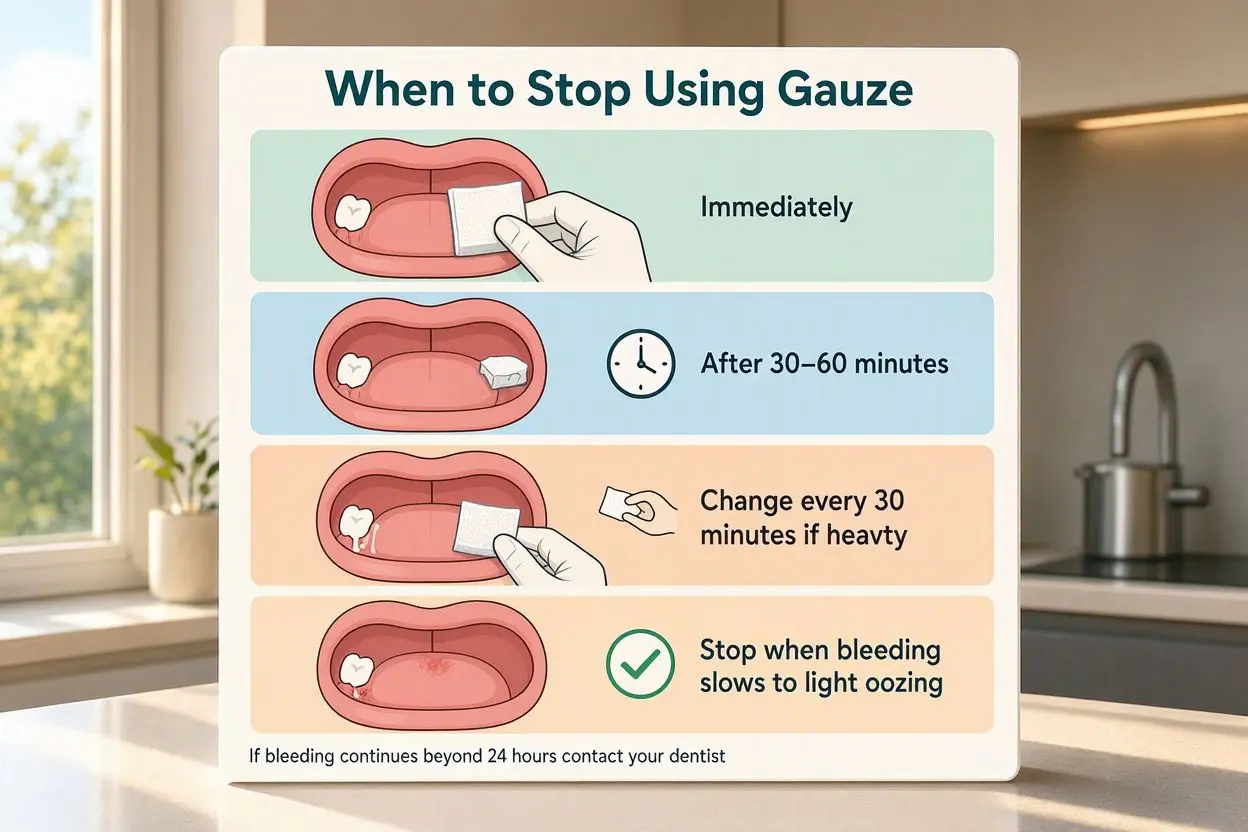
Bite down firmly (not aggressively) on the first pad for 30 to 45 minutes. Try not to peek, chew on it, or keep changing it every few minutes. Pulling it out too often disturbs the clot you’re trying to protect.
After that time, take it out gently and look at it.
- Mostly clean or lightly pink? Bleeding is under control. You may not need another one.
- Soaked with bright red blood? Fold a fresh pad, place it directly over the socket, and bite down again for another 30 to 45 minutes.
When Can You Actually Stop Using Gauze?
There is no single clock time that works for everyone. Healing speed, the difficulty of the extraction, and how many teeth were removed all play a part. Still, these signs tell you it’s time to stop:
1. The Gauze Comes Out Only Lightly Stained
A faint pink tint is fine. If a fresh pad stays mostly clean after 30 minutes, you don’t need more.
2. Bleeding Has Slowed to a Slight Ooze
A little pink saliva is normal for the rest of the day. That is not a reason to keep gauze in.
3. A Few Hours Have Passed
For most people, bleeding settles down around 2 to 4 hours after surgery. Some need up to 6 hours. If you’re past that and things look calm, you’re likely done.
4. Your Dentist Has Told You So
Your oral surgeon knows how your extraction went. If they gave specific instructions, follow those over any general guide, including this one.
A Simple Timeline to Follow
Here’s what a typical first day looks like:
First 30 to 45 Minutes
Bite on the first gauze pad with steady pressure.
Hours 1 to 4
Replace gauze as needed, roughly every 30 to 45 minutes, only if it’s soaked through.
Hours 4 to 6
Bleeding should be light by now. Most people stop using gauze in this window.
The Rest of the First 24 Hours
Light oozing and pink-tinted saliva can continue. If it picks up again, go back to gauze for another 30 minutes.
How to Use Gauze the Right Way
Technique matters as much as timing.
- Wash your hands before touching your mouth.
- Fold the gauze into a thick, firm pad instead of using a flat piece.
- Place it directly over the socket, not just between your teeth.
- Bite down with gentle, steady pressure. Clenching hard doesn’t help.
- Keep it still. Don’t talk, chew, or move it around.
- Remove it slowly so you don’t tug the clot loose.
Should Gauze Be Wet or Dry?
For the first day, use it dry or very lightly dampened, as your dentist directs. Some people find that slightly moist gauze is more comfortable to remove, since dry gauze can stick to the clot.
Can You Use a Tea Bag Instead?
Some dentists suggest a damp, cooled black tea bag if gauze isn’t controlling bleeding. Tea contains tannic acid, which may help blood vessels tighten. Ask your dentist first before relying on it.
Should You Sleep With Gauze in Your Mouth?
It’s best not to. Gauze can slip out during sleep or, worse, end up somewhere it shouldn’t. If you’re still bleeding at bedtime, fold a fresh pad and bite on it until you feel drowsy, then take it out before you fall asleep. Put an extra pillow under your head, since keeping your head raised reduces bleeding overnight.
What If Bleeding Doesn’t Stop?
Some oozing in the first 24 hours is completely normal. Blood mixes with saliva, so even a small amount can look dramatic in the sink.
Here is how to tell the difference between normal and not normal.
Normal
- Pink or red-tinged saliva
- Light oozing that fades with gauze pressure
- Small specks of blood on your pillow in the morning
Call Your Dentist or Oral Surgeon If
- Bright red blood keeps soaking through gauze after several changes
- Bleeding gets heavier instead of lighter
- You’ve been bleeding steadily for more than 24 hours
- You feel dizzy, weak, or short of breath
- Your mouth fills quickly with blood
If bleeding is severe and you can’t reach your dentist, go to an emergency room.
Common Mistakes That Make Bleeding Worse
A few habits can undo your progress:
- Spitting or rinsing hard on day one
- Using a straw, which creates suction that can pull the clot out
- Smoking or vaping, which slows healing and raises the risk of dry socket
- Touching the socket with your tongue or fingers
- Hot drinks and spicy food, which can increase blood flow to the area
- Strenuous exercise in the first 24 to 48 hours
What to Do After You Stop Using Gauze
Once the gauze is gone, the next goal is protecting that clot while the area heals.
For the First 24 Hours
- Rest with your head slightly elevated.
- Use an ice pack on your cheek, 15 to 20 minutes on and off, to limit swelling.
- Stick to cool or lukewarm soft foods like yogurt, applesauce, or smoothies (with a spoon, not a straw).
From Day 2 Onward
- Gently rinse with warm salt water after meals, letting the water fall out of your mouth instead of spitting.
- Brush carefully and avoid the extraction site.
- Slowly bring back soft, easy-to-chew foods.
Watch for Dry Socket
If the clot is lost, the bone underneath is exposed. This is called dry socket, and it usually shows up 2 to 4 days after surgery with severe, throbbing pain, a bad taste, or visible bone in the socket. Contact your dentist if this happens. It’s treatable.
Quick Summary
- Keep the first gauze pad in for 30 to 45 minutes.
- Change it only if it’s soaked with blood.
- Stop once bleeding is a light ooze or has stopped, typically 2 to 6 hours after surgery.
- Light pink saliva for up to a day is normal.
- Heavy or worsening bleeding needs a call to your dentist.
Frequently Asked Questions (FAQs)
How long should I keep gauze in after wisdom tooth removal?
Keep the first pad in for 30 to 45 minutes. If bleeding continues, replace it and bite down again for another 30 to 45 minutes until it slows to a light ooze.
Can I stop using gauze after 2 hours?
Yes, if the gauze is coming out clean or only lightly pink and bleeding has slowed. If it’s still soaking through, keep going and change the pad.
Is it normal to bleed 24 hours after wisdom tooth extraction?
Light oozing and pink saliva are normal for up to 24 hours. Steady, bright red bleeding is not, and you should contact your dentist.
What happens if I remove the gauze too early?
You may disturb the forming clot and restart bleeding. If that happens, place a fresh folded pad over the socket and bite down for 30 minutes.
Can I leave gauze in too long?
Yes. Once bleeding has stopped, extra gauze isn’t helpful. It can irritate the area and may stick to the clot, making removal uncomfortable.
Should the gauze be wet or dry?
Dry for the first pad is common advice, though a slightly dampened pad can be easier to remove later. Follow your dentist’s instructions.
Can I sleep with gauze in my mouth?
It’s not recommended. Remove it before you fall asleep, and keep your head elevated to limit overnight bleeding.
How many gauze pads will I need?
It varies. Many people use 3 to 6 pads on the first day. Ask your dentist for a few extra to take home.
What can I use if I run out of gauze?
A clean, damp black tea bag is sometimes suggested. Avoid cotton balls or tissue, as fibers can stick to the clot. Call your dentist if you’re out of supplies and still bleeding.
When should I call my dentist about bleeding?
Call if bleeding is heavy, gets worse, or doesn’t improve after several gauze changes over a few hours, or if it continues beyond 24 hours.
Final Thoughts
Gauze is a small part of recovery, but using it correctly in those first hours makes a real difference. Bite gently, change it only when needed, and stop once the bleeding fades. If something feels off, don’t wait it out. A quick call to your dentist is always better than guessing.
Disclaimer: This article is for general information only and isn’t a substitute for professional dental advice. Always follow the instructions given by your own dentist or oral surgeon.