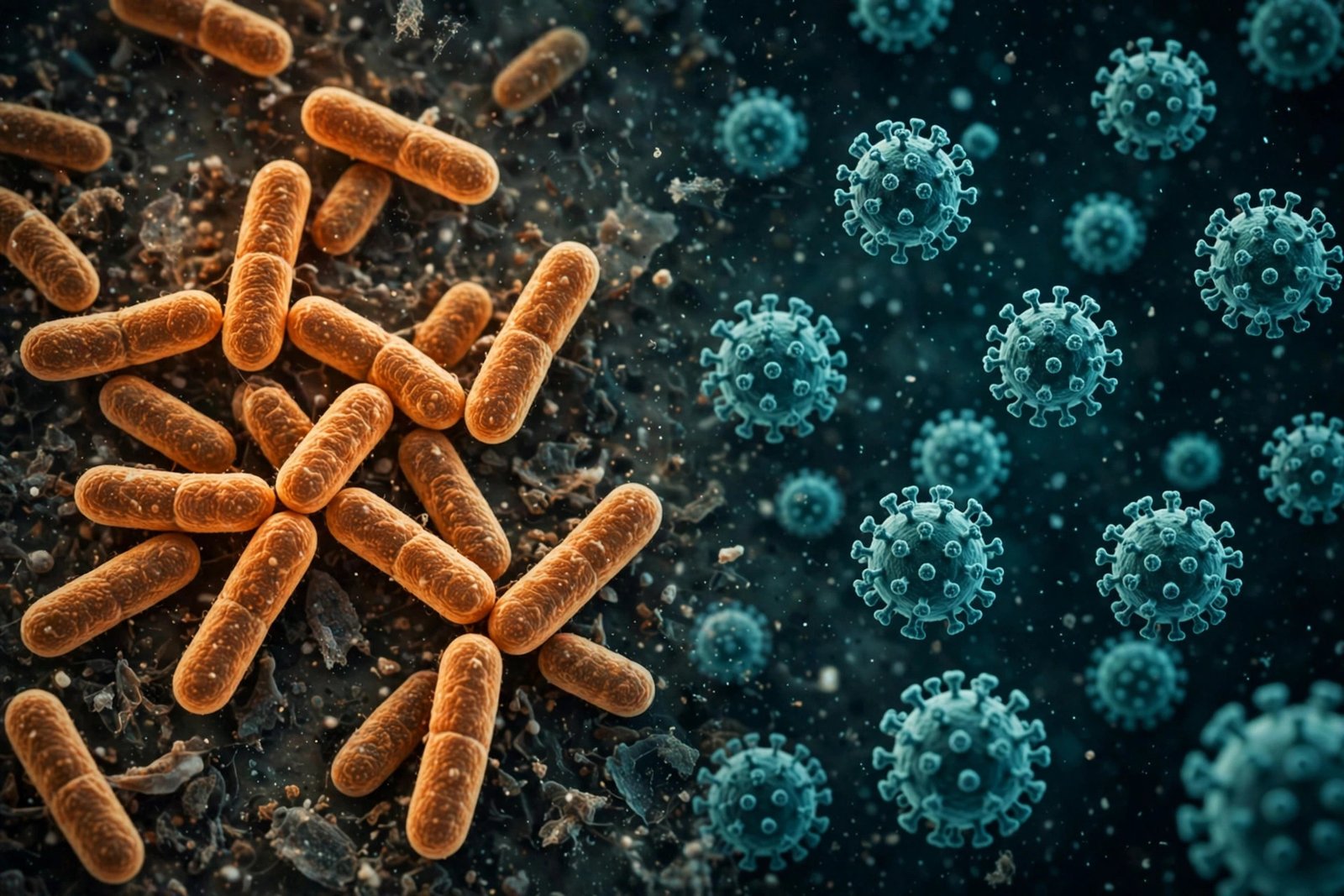
People use “virus” and “bacteria” almost interchangeably — “I caught a bug,” “it’s going around” — but they’re profoundly different entities, and the difference determines everything about treatment. Antibiotics kill bacteria and do absolutely nothing to viruses (taking them for a viral cold is not just useless, it fuels antibiotic resistance). Viruses aren’t even unanimously considered alive. Understanding what each one is, how they make you sick differently, and why treatments differ isn’t trivia — it’s practical knowledge that affects real medical decisions.
What Bacteria Are: Tiny Living Organisms
Bacteria are single-celled living organisms — complete, self-sufficient life forms with their own DNA, ribosomes, and metabolism. They eat, reproduce (by dividing, sometimes every 20 minutes), and evolve. A single teaspoon of soil holds more bacteria than there are people on Earth. Most are harmless or beneficial: your gut microbiome — trillions of bacteria — digests food, synthesizes vitamins, trains your immune system, and even influences mood via the gut-brain axis. Bacteria have been evolving for ~3.5 billion years and inhabit every environment on the planet, from deep-sea vents to Antarctic ice.
Pathogenic bacteria — the minority that cause disease — typically harm you through two mechanisms: tissue invasion and destruction (Staphylococcus in wounds, Streptococcus in throats) or toxins (tetanus toxin attacking nerves, cholera toxin causing devastating fluid loss, E. coli O157’s Shiga toxin). Because bacteria are living cells with their own machinery, they can be killed directly: antibiotics target bacterial-specific structures — cell walls (penicillin), protein synthesis (tetracyclines), DNA replication (fluoroquinolones) — that human cells don’t share, which is why antibiotics can kill bacteria without (usually) killing you.
The resistance crisis
Bacteria evolve fast, and antibiotic overuse selects for resistant strains — MRSA, drug-resistant tuberculosis, CRE. The WHO ranks antimicrobial resistance among the top global health threats, projected to cause 10 million deaths annually by 2050 if unchecked, while NIH research programs race to develop new antibiotics and alternatives. Every unnecessary antibiotic prescription — for viral colds, for instance — accelerates this. Finish prescribed courses, never share antibiotics, and don’t demand them for viral illnesses.
What Viruses Are: Infectious Code, Arguably Not Alive
Viruses are radically simpler: typically just genetic material (DNA or RNA) wrapped in a protein coat, sometimes with a lipid envelope stolen from host cells. They’re 20–400 nanometers — tens to hundreds of times smaller than bacteria. Crucially, viruses have no metabolism, can’t reproduce on their own, and carry minimal machinery. They exist in a gray zone: inert outside a host (some survive for days on surfaces, essentially as complex molecules), active only inside living cells, where they hijack the host’s ribosomes to manufacture copies of themselves.
This is why the “are viruses alive?” debate persists: they evolve and replicate (life-like), but only by parasitizing living cells, with no independent metabolism (not life-like). The scientific consensus leans toward “not alive” in the strict sense — they’re better described as infectious genetic programs. And they’re astonishingly abundant: an estimated 10^31 viruses on Earth — ten million times more than stars in the observable universe — mostly bacteriophages that infect bacteria, not us. The vast majority of viruses are harmless to humans; only a few hundred cause human disease.
How They Make You Sick — Differently
Bacterial infections tend to be localized: strep throat stays in the throat, a UTI stays in the urinary tract, a skin infection stays in the skin. They often produce pus (dead white blood cells from the battle), respond to antibiotics, and can often be diagnosed with bacterial cultures. Classic bacterial diseases: strep throat, UTIs, bacterial pneumonia, tuberculosis, cholera, Lyme disease, whooping cough.
Viral infections tend to be systemic or spreading: influenza brings whole-body aches and fever, colds inflame the whole upper respiratory tract, norovirus hits the gut. They don’t produce pus the same way, don’t respond to antibiotics, and are diagnosed differently (PCR tests, antigen tests, antibody tests). Classic viral diseases: common cold, flu, COVID-19, measles, chickenpox, HIV, norovirus, rabies. The practical rule: fever + localized pain + pus suggests bacterial; widespread aches + respiratory or GI symptoms without pus suggests viral — though only testing confirms, and plenty of cases blur the line.
Why antibiotics don’t work on viruses (and why it matters)
Antibiotics target bacterial machinery — cell walls, bacterial ribosomes, bacterial enzymes. Viruses have none of these; they’re just genetic code using your cells’ machinery, so there’s nothing for the antibiotic to attack. Taking antibiotics for a viral infection kills your beneficial gut bacteria (causing side effects), selects for resistant strains, and does zero to the virus. It’s pure downside. Knowing whether you have a cold or allergies is the everyday version of this diagnostic thinking — and supporting your immune system helps against both categories.
How Treatments Differ
Bacterial infections: antibiotics (matched to the bacterium — culture and sensitivity testing guides the choice), sometimes plus drainage of abscesses or supportive care. Most respond within 48–72 hours of the right antibiotic. Viral infections: no direct cure for most — treatment is supportive (rest, fluids, fever management) while your immune system clears it. Exceptions exist: antivirals (Tamiflu for flu, Paxlovid for COVID-19, antiretrovirals for HIV) interfere with specific viral replication steps, but they’re virus-specific, work best early, and aren’t broad-spectrum like antibiotics. Vaccines prevent both viral diseases (measles, polio, HPV, flu, COVID-19) and some bacterial ones (tetanus, diphtheria, pertussis, pneumococcal) — prevention doesn’t care about the distinction, even though treatment must.
Frequently Asked Questions
Is the common cold bacterial or viral?
Viral — caused by rhinoviruses (and others). That’s why antibiotics don’t help colds, why colds resolve on their own in 7–10 days, and why “just take antibiotics” for a cold is one of medicine’s most harmful folk practices.
Can a viral infection turn bacterial?
Yes — secondary bacterial infections are common. Flu damages airway linings, inviting bacterial pneumonia; colds can lead to bacterial sinusitis. Worsening symptoms after initial improvement (especially with new fever or localized pain) warrant re-evaluation — that’s when antibiotics may become appropriate.
Are all bacteria bad?
The overwhelming majority are harmless or beneficial. Pathogenic bacteria are a small minority. Your microbiome’s bacteria are essential partners — digesting food, producing vitamins, and training immunity — which is why broad-spectrum antibiotics’ collateral damage to gut flora is a genuine (if usually temporary) cost worth avoiding when possible.
What’s bigger, bacteria or viruses?
Bacteria, by roughly 10–100x. Typical bacteria are 1–5 micrometers; viruses are 20–400 nanometers. Bacterial filters won’t catch viruses, which is why water purification needs different approaches for each — a practical consequence of the size gap.
Can you have both at once?
Yes — co-infections happen, and the secondary-bacterial-after-viral pattern is the classic example. Diagnosis determines treatment: test, don’t guess, because the treatments are opposites in the antibiotic dimension.
Bacteria are living single-celled organisms you can kill with antibiotics; viruses are infectious genetic programs you generally can’t — your immune system (aided by antivirals and vaccines) does that work. The distinction drives every treatment decision, from why your doctor won’t prescribe antibiotics for a cold to why finishing the prescription matters when they will. It’s one of the most practically useful bits of biology you’ll ever learn, and it makes you a smarter patient — the CDC’s disease resources are the authoritative place to go deeper.