About one in four used cars on the market has been in an accident, and sellers do not always volunteer that information. A repaired fender-bender is no big deal; a bent frame, flooded interior, or deployed airbags are. Learning how to check if a used car was in an accident — and how bad it was — is the single highest-value skill in used-car shopping. Here is the complete playbook.
Start With the VIN Reports: Carfax, AutoCheck, and the Free Options
Every car has a 17-character Vehicle Identification Number, found on the driver’s-side dashboard (visible through the windshield), the driver’s door jamb sticker, and the title. Run it through a vehicle history report before you spend a dollar on inspections. Carfax ($40 for one report, $100 for three) and Experian’s AutoCheck ($25) pull from insurance claims, police reports, DMV records, and service databases to flag reported accidents, airbag deployments, flood damage, salvage titles, and odometer rollbacks.
Know their limits: these reports only show reported incidents. Accidents repaired without insurance claims — cash repairs, which are extremely common — never appear. A clean report means “no reported accidents,” not “no accidents.” Complement paid reports with free checks: the National Insurance Crime Bureau’s VINCheck (nicb.org) flags total-loss and theft records free, and the NHTSA recall lookup shows open safety recalls by VIN. Run all three before you visit the car.
Reading the Report Like a Detective
Not all accident records are equal. “Minor damage reported” with no airbag deployment and no structural damage usually means a bumper or fender repair — acceptable on most used cars if the repair was done well. “Moderate damage” warrants a careful inspection. “Severe damage,” airbag deployment, or any mention of frame/structural damage, flood, or salvage/rebuilt title should make you walk away unless you are a professional buying at a steep discount.
Look at the timeline, not just the incidents. Multiple owners in short succession after an accident report can signal the car was never right afterward. Gaps in registration or service history around the accident date are worth questioning. And check where the car lived: a “clean” car that spent five years in a hurricane state deserves a flood-damage inspection regardless of what the report says. Title washing — moving a salvage car through states with lax branding laws to get a clean title — is a real scam; a report showing registrations in multiple states in quick succession is a red flag.
The Physical Inspection: What Your Eyes Can Tell You
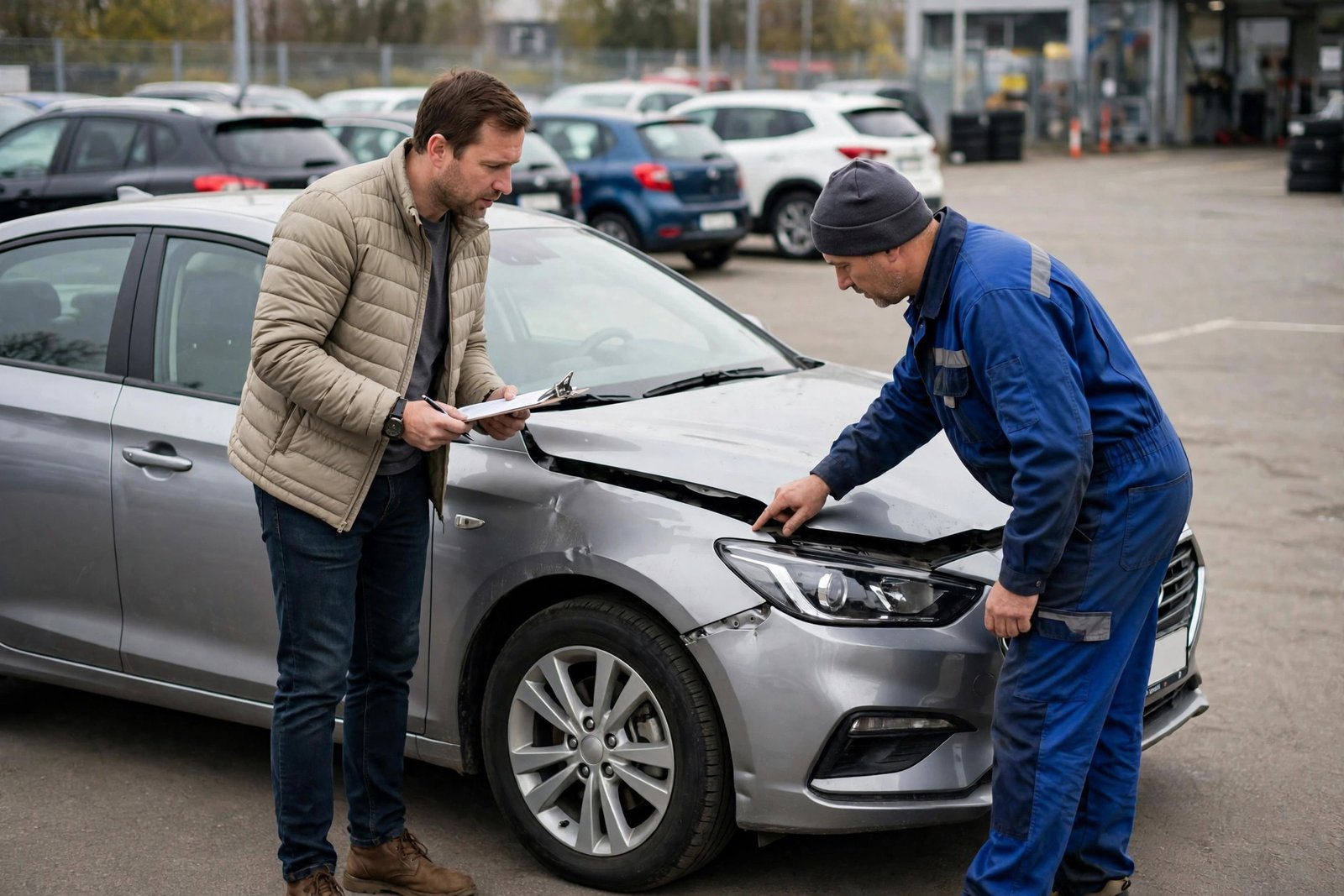
Reports miss unreported repairs, but sheet metal remembers. Inspect the car in daylight on level ground and look down each side from front to rear — ripples, waves, or panels that do not align indicate bodywork. Check panel gaps: the spaces between doors, fenders, hood, and trunk should be even on both sides. Uneven gaps, doors that need a slam to close, or a hood that sits crooked all suggest accident repair.
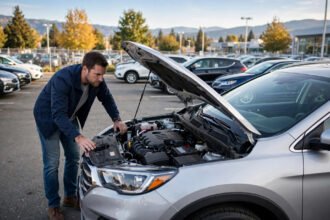
Look for paint clues: overspray on trim, rubber seals, or inside door jambs; paint texture that differs between panels (factory paint has a consistent orange-peel texture); and color mismatch visible at an angle in sunlight. Open the hood and trunk and inspect the inner structure — factory welds are uniform rosette spots; repaired areas show irregular welds, seam sealer blobs, or wrinkled metal. Check that the VIN stickers on doors, fenders, and hood match the dashboard VIN; replaced panels often lack the sticker or show a different number. Consumer Reports’ used-car buying guide includes a printable inspection checklist worth bringing along.
Underneath and Inside: The Hidden Evidence
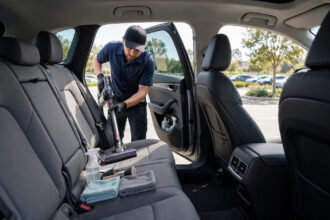
Get the car on a lift — any inspection worthy of the name includes this. Look for bent or replaced suspension components, fresh undercoating sprayed over damage (a classic cover-up), kinked frame rails, and mismatched bolts. Flood cars hide evidence too: pull back the carpet in the trunk and under the seats to check for silt, rust on seat-mount bolts, moisture under the spare tire, and a musty smell that air freshener cannot quite kill. Check the headliner and seatbelts for water staining.
Inside, deployed-and-replaced airbags are a major concern: the airbag covers should fit flush with no gaps, and the dashboard should show no signs of removal. After any airbag deployment, the car’s computer stores a crash record — a professional scan tool can read it, which is one more reason a pre-purchase inspection by an independent mechanic ($150 to $250) is the best money in used-car buying. It catches what reports and eyes miss, and it gives you leverage to negotiate or walk away.
The Test Drive as a Diagnostic Tool
Drive the car the way accident damage reveals itself: on a straight, level road, briefly loosen your grip and see if it pulls to one side — misalignment from frame damage shows up here. Brake firmly from 40 mph; pulling, vibration, or a crooked steering wheel under braking suggests suspension or frame issues. Listen for wind noise at highway speed, which indicates poorly fitted panels or seals. Test every electronic feature — windows, locks, lights, infotainment, backup camera — because repaired cars often have electrical gremlins from pinched or spliced wiring.
Pay attention to how the car feels over bumps. Clunks, rattles, or a general sense of looseness can indicate suspension damage from a hard impact. Compare it against another example of the same model if you can — back-to-back drives make subtle wrongness obvious. And trust your gut: if something feels off but you cannot name it, the inspection will usually find it. There are always more used cars; there is no reason to talk yourself into a questionable one.
Negotiating With Accident History
A documented minor accident is a negotiating tool, not necessarily a dealbreaker. Cars with accident history typically sell for 10 to 30 percent less than clean-history equivalents, depending on severity. Use this: get the price adjusted to reflect the history, verify the repair quality with your mechanic, and you can get a solid car at a discount. But never pay clean-history price for a car with a damage record — the history follows the car and will cost you again at resale.
Walk away from: frame or structural damage, flood history, salvage or rebuilt titles (unless you are an expert buying at expert prices), airbag deployments on cars without impeccable repair documentation, and any seller who resists an independent inspection. A seller who will not let your mechanic look at the car is telling you everything you need to know. Smart used-car shopping is mostly about patience and verification — the same discipline as cutting everyday expenses: small careful decisions compound. And once you own the car, keeping up with a realistic maintenance budget protects the investment you just researched so carefully.
Conclusion
Checking a used car for accident history means layering three checks: VIN reports (Carfax/AutoCheck plus free NICB and NHTSA lookups) for the documented record, a daylight physical inspection for the unreported repairs, and an independent mechanic’s inspection for what neither can see. Minor repaired damage, properly fixed and properly discounted, is fine. Structural damage, flood history, and salvage titles are not. The buyer who checks all three layers almost never buys someone else’s wreck.
Frequently Asked Questions
Is a Carfax report enough to check for accidents?
No. Carfax only shows reported incidents — accidents repaired without insurance claims never appear. Always combine the report with a physical inspection and an independent mechanic’s pre-purchase inspection.
Should I buy a car that was in a minor accident?
Often yes, if the repair was done properly and the price reflects the history (typically 10–30 percent below clean-history value). Have your mechanic verify the repair quality first.
What is title washing?
The practice of moving a salvage-titled car through states with weak title-branding laws to obtain a clean title. Multiple quick state registrations on a history report are the telltale sign.
Can a mechanic tell if airbags were replaced?
Usually yes. Inspectors check airbag cover fitment, dashboard removal signs, and the crash data stored in the car’s computer, which records deployment events permanently.
How much does a pre-purchase inspection cost?
Typically $150 to $250 at an independent shop, including a lift inspection and computer scan. It is the highest-ROI spending in used-car buying — it regularly saves buyers thousands or steers them away from wrecks.