Ceramic coating has gone from detailing-shop secret to mainstream obsession, with prices ranging from $50 DIY kits to $2,000 professional applications. Shops promise years of glossy, hydrophobic protection that makes water bead off like the car is permanently waxed. Some of it is real. Some of it is marketing. Here is what ceramic coating actually does, what it costs, and whether it is worth it for your car.
What Ceramic Coating Actually Is
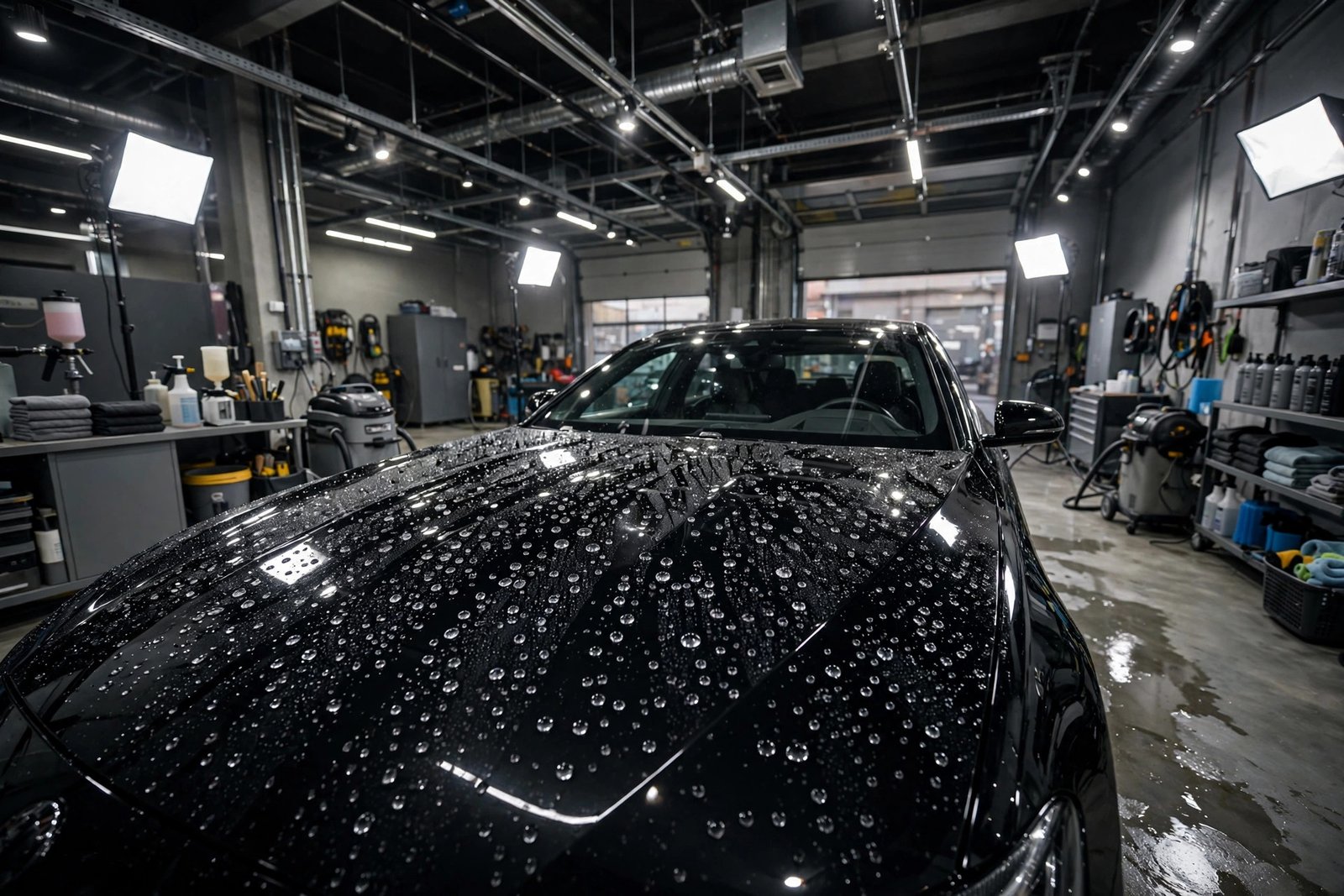
A ceramic coating is a liquid polymer — usually silicon dioxide (SiO2) based — that chemically bonds to your car’s clear coat, creating a hard, glass-like protective layer. Unlike wax, which sits on top of the paint and washes away in weeks, a true ceramic coating bonds at a molecular level and lasts years. The headline benefits: extreme water beading (hydrophobic effect), UV protection that slows paint fading, resistance to light chemical etching from bird droppings and bug splatter, and a deep glossy look.
What it is not: armor. Ceramic coatings do not prevent rock chips, scratches, or dents — for that you need paint protection film (PPF), a physical urethane layer. Coatings measure 2 to 10 microns thick; a human hair is about 70 microns. They resist light marring and make the car dramatically easier to wash, but a shopping cart will still win. Understanding this limitation is the difference between a satisfied customer and a disappointed one.
Professional vs. DIY: The Real Cost Breakdown
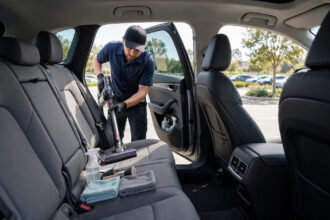
Professional ceramic coating costs $800 to $2,000+ depending on the vehicle size, paint condition, and coating brand. Here is the secret shops do not advertise: most of that price is paint correction, not the coating itself. A proper job requires machine-polishing the paint to remove swirls and scratches first — 4 to 12 hours of skilled labor — because the coating locks in whatever is underneath. Coating over imperfect paint permanently seals in the imperfections.
DIY kits from brands like Adam’s, AvalonKing, and CarPro cost $50 to $150 and contain genuinely good chemistry — the same SiO2 technology. What you do not get is the paint correction, the controlled environment, or the experience. DIY results last 1 to 3 years versus 3 to 7 for professional jobs, and mistakes (high spots, streaking) are common for first-timers. If your paint is already in good shape and you are meticulous, DIY is a legitimate option. If your car has swirl marks — and most daily drivers do — professional correction is where the money goes, and it is worth it. Consumer Reports’ car care guides compare protection products with independent testing.
The Honest Benefits
The hydrophobic effect is the star of the show and it is genuinely impressive: water sheets off, dirt releases easily, and washing takes half the time. For people who wash their cars regularly, this alone justifies the cost — maintenance washes become quick and satisfying instead of chores. UV protection is real too; coated cars fade noticeably slower over years of sun exposure, which matters in southern and western states.
Chemical resistance helps against the small daily assaults: bird droppings, tree sap, bug splatter, and road film etch into unprotected clear coat surprisingly fast, sometimes within hours in hot sun. A coating buys you time — contaminants sit on the coating instead of the paint, and wipe off before they etch. None of this makes the car maintenance-free, but it makes maintenance dramatically easier, which means the car actually stays cleaner because washing is less of a project.
The Limitations Nobody Mentions
Ceramic coatings require maintenance. The marketing implies “coat it and forget it,” but coated cars still need regular washing — every two to four weeks — with pH-neutral soap, and periodic “topper” spray sealants to maintain the hydrophobic behavior. Automatic car washes with harsh brushes will degrade the coating; touchless or hand washing is the rule. Neglect a coated car and it looks worse than a neglected uncoated car, because contamination bonds to the coating unevenly.
Water spots are the coating’s nemesis. Hard water left to dry on a coated car in the sun can etch mineral deposits into the coating that are difficult to remove — ironic for a product sold on water behavior. And the durability claims (“9H hardness,” “lifetime protection”) deserve skepticism: the 9H pencil-hardness scale measures something nearly irrelevant to real-world scratch resistance, and no coating lasts a lifetime without maintenance. Read warranties carefully; most require documented maintenance to stay valid. The AAA’s car care resources are a good reality check on protection-product claims before you spend.
Ceramic Coating vs. Wax vs. Paint Protection Film
Traditional carnauba wax costs $15 and an afternoon, looks gorgeous, and lasts 4 to 8 weeks. Synthetic sealants cost $20 to $40 and last 4 to 6 months with far less effort than wax. Ceramic coating costs 10 to 50 times more and lasts years. The value question: do you want to spend $1,200 once or $30 twice a year? For enthusiasts who enjoy detailing, sealants are the rational choice. For people who want to wash less and protect more, coating wins.
Paint protection film is the heavyweight option: $1,500 to $5,000+ for partial or full coverage, but it actually prevents rock chips and scratches — the thing coatings cannot do. Many serious owners combine both: PPF on the front clip (hood, bumper, fenders, mirrors) where rocks hit, ceramic coating everywhere else for gloss and easy washing. It is the most expensive approach and the most complete. For budget-focused owners, a quality sealant plus careful washing delivers 70 percent of the benefit for 5 percent of the cost — one of the simplest ways to save money without sacrificing results.
Who Should (and Shouldn’t) Get It
Ceramic coating is worth it if: you own a car you love and plan to keep 4+ years, you wash it regularly (or pay someone who does), you park outside in sun or under trees, and you value the glossy look. It is especially worthwhile on dark colors, which show swirls and fading most.
Skip it if: you lease or sell cars every 2 to 3 years (you will never recoup the cost), you run your car through automatic brush washes (which destroy the coating), you will not maintain it (a neglected coating is wasted money), or your paint needs major correction that pushes the total past what the car justifies. A $2,000 coating on a $6,000 commuter is questionable math; on a $60,000 car you will keep for a decade, it is sensible preservation. Before spending on appearance, make sure the fundamentals are covered — a car with worn tires or overdue maintenance needs a clear maintenance budget more than it needs glossy paint.
Conclusion
Ceramic coating is a legitimate, long-lasting paint protection technology — not a miracle, not a scam. It delivers real hydrophobic behavior, UV protection, and easier washing for years, but it does not prevent chips or scratches, it requires ongoing maintenance, and most of the professional price is paint correction. Worth it for keepers you wash regularly; overkill for leases, beaters, and the wash-neglectful. Match the protection to the car and the owner, not the marketing.
Frequently Asked Questions
How long does ceramic coating really last?
Professional coatings last 3 to 7 years with proper maintenance; DIY kits last 1 to 3 years. “Lifetime” claims assume ideal maintenance most owners will not perform. Maintenance washing and periodic toppers are what determine actual lifespan.
Can I apply ceramic coating myself?
Yes, if the paint is already in good condition and you are patient and meticulous. The coating chemistry in DIY kits is genuinely good. The hard part is paint correction — if your paint has swirls, professional correction is worth paying for before any coating.
Does ceramic coating prevent rock chips?
No. Coatings are microns thin and offer no meaningful impact protection. Only paint protection film (PPF) prevents rock chips. This is the most common misconception about ceramic coatings.
Can you wax a ceramic-coated car?
You can, but traditional waxes can mask the coating’s hydrophobic behavior. Use SiO2-based spray toppers designed for coated cars instead — they refresh the coating rather than covering it up.
Is ceramic coating worth it on a leased car?
Almost never. You will return the car before the coating’s lifespan justifies its cost, and you get no resale benefit. A $30 sealant twice a year is the rational choice for leases.