Diana Ross Net Worth Explained: Six Decades, One $350 Million Crown
The Supremes Take the Charts and the Years That Followed It
1961–1969 — The Supremes Take the Charts
Ross signed with Motown as the lead singer of the Supremes and, after early singles stalled, the group broke through in 1964 with Where Did Our Love Go. Five consecutive number-one singles followed, and the run eventually stretched to twelve chart-toppers, including Baby Love, Stop! In the Name of Love, You Can’t Hurry Love, You Keep Me Hangin’ On and Someday We’ll Be Together, her final single with the group in 1969. She sang lead on every one, fronted the act on the era’s biggest variety stages and carried Motown’s crossover strategy into living rooms that rhythm and blues had never reached before. Berry Gordy’s label built its empire substantially on her voice and her poise.
1970–1976 — Solo Stardom and the Screen
She launched her solo career in 1970 with a self-titled debut album and the number-one single Ain’t No Mountain High Enough, then reached the top again with Touch Me in the Morning in 1973. Mahogany gave her the hit Do You Know Where You’re Going To, and Lady Sings the Blues in 1972 cast her as Billie Holiday in a performance that earned an Academy Award nomination and proved her acting carried the same authority as her singing. Love Hangover topped the charts in 1976 and pointed her toward the dance floor she would rule in the decade’s final years.
1980–1981 — Chic, a Giant Album and a New Label
She teamed with Chic’s producers for Diana in 1980, and the album delivered Upside Down and I’m Coming Out, two records that anchor dance music to this day. The title song of Endless Love, her duet with Lionel Richie from 1981, sat at number one for nine weeks and became one of the best-selling singles of its era. That same year she left Motown for RCA in a deal reports valued at around $20 million — a contract figure, and this profile counts it strictly as an earnings event from her history, never as a measure of her wealth. Why Do Fools Fall in Love kept the hits coming on the new label.
1983–1999 — Central Park, Comebacks and Endurance
Her 1983 Central Park concerts drew enormous crowds and entered legend after a storm cut the first show short and she returned the next day to finish it. Chain Reaction topped the British chart in 1986, giving her a transatlantic reach few of her contemporaries matched. She returned to Motown in 1989, kept recording through the 1990s with albums including The Force Behind the Power and Every Day Is a New Day, and toured with a consistency that turned nostalgia into a living, working act. Honours accumulated: a star billing at major award shows, hall of fame inductions and tributes from younger stars who cite her as the template.
2006–2026 — The Legend on the Road
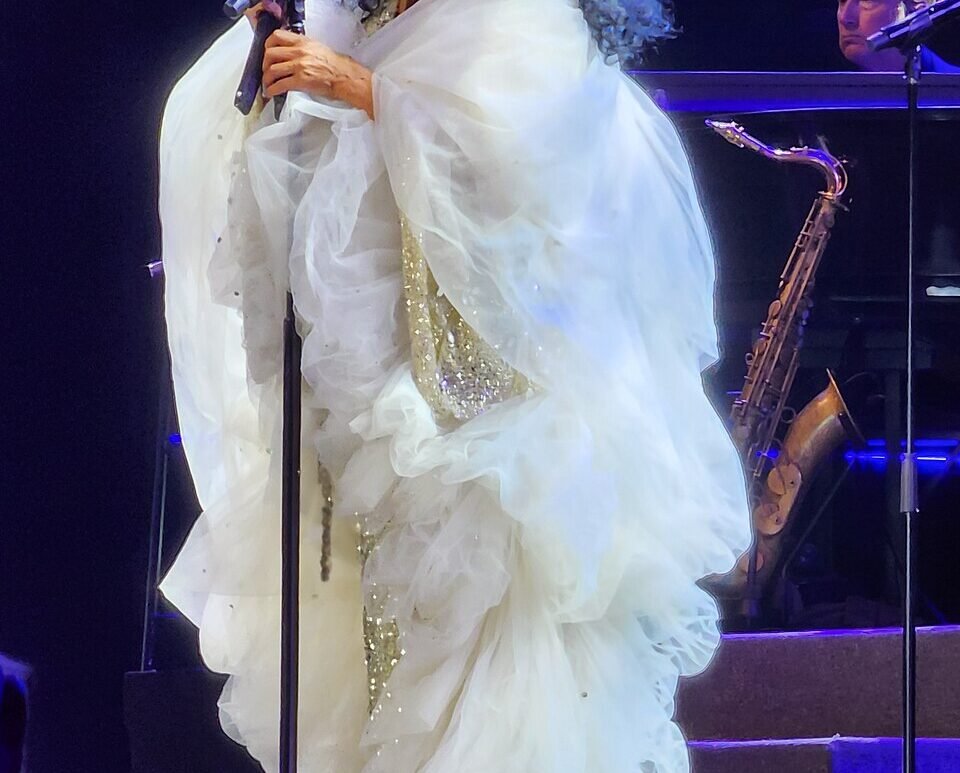
I Love You arrived in 2006, and Thank You in 2021 gave her a late-career studio album that fans received warmly and that earned Grammy recognition. The road, though, defines her modern era. Her Diana in Motion tour played through 2026 with dates ending on 4 October in Las Vegas, and reviewers consistently note the same things: the gowns, the stamina and a voice that still floats over the band exactly where it always sat. Across the Supremes years and her solo catalogue, her albums include Diana Ross, Everything Is Everything, Surrender, Touch Me in the Morning, Diana & Marvin, Ross, Diana, Why Do Fools Fall in Love, Swept Away, Eaten Alive, Red Hot Rhythm & Blues, The Force Behind the Power, One Woman, Take Me Higher, Every Day Is a New Day, I Love You and Thank You — a shelf of records that keeps selling and streaming sixty years after the first one.
Diana and the $350 million Question, Answered in Full
Celebrity Net Worth puts Diana Ross’s fortune at $350 million, in a snapshot of the tracker’s page dated 6 November 2026, and this profile uses that attributed figure throughout. Readers will encounter a lower total, around $250 million, in general coverage; this profile records that number only to decline it, because no permitted named source publishes it and a figure without a source carries no weight here. The $350 million rests on identifiable pillars. Six decades of record sales and the streaming royalties her catalogue generates form the base, and the Supremes’ masters sit among the most valuable in popular music. Songwriting income plays a smaller role than performance income in her case, but publishing and licensing place her songs in advertisements, stage productions and samples year after year, and each placement pays. Touring built the modern fortune: her live work from the 1980s onward sold premium tickets to loyal audiences across several continents, and the Diana in Motion dates through October 2026 extended that income into her eighties. The 1981 RCA agreement, reported at about $20 million, stands in her history as an earnings milestone of its era, and this profile labels it exactly that. Property and investments, accumulated across sixty years of high earnings, complete a picture that no single contract explains. The honours economy adds a further, quieter stream that accountants rarely itemise and audiences always feel. The Kennedy Center honoured her in 2007, the Grammy organisation gave her its Lifetime Achievement Award in 2012, and President Obama presented her with the Presidential Medal of Freedom in 2016 — three of the highest civic and artistic honours her country bestows, each of which renews demand for the catalogue, the concerts and the licensing that actually pay. Her 2022 performance at the Glastonbury festival’s legends slot introduced her to a new generation of festival audiences in Britain, and her British and European dates since then have sold accordingly. A Supremes reunion remains the great unrealised payday of her career — she toured with two later members of the group in 2000 under a billing that made the distinction plain — and its absence from her history underlines the point this section keeps making: she never needed the reunion cheque, because the solo catalogue, the solo tours and the solo brand carried the fortune on their own for half a century. The tracker’s total, in short, reflects duration as much as scale: she earned at star level for longer than almost anyone in her business, and she kept the rights, the audience and the work ethic that turn earnings into a fortune.
A Fast Look at Diana Ross: $350 million and Counting
Diana Ross defines the word diva in its original, earned sense. She fronted the Supremes through a run of number-one singles that changed popular music, left the group in 1970 and built a solo career that spans anthems, ballads and dance records across six decades. At 82 she still tours: her Diana in Motion dates ran through 4 October 2026 and closed in Las Vegas, with audiences spanning four generations singing every word back at her. Celebrity Net Worth puts her fortune at $350 million, and this profile attributes that figure to the tracker at every mention. General coverage sometimes cites a lower total around $250 million; the Fortune section explains why this profile declines to use it. She keeps her private life private, confirms no current partner publicly and lets a catalogue of more than sixty years do the talking. Few careers in entertainment history run longer, and almost none run richer.
Detroit Made Diana Ready for The Supremes Take the Charts
Fred Ross Sr. and Ernestine Ross, née Moten, welcomed their daughter Diana Ross in Detroit, Michigan, on 26 March 1944, and raised her in the city’s Brewster-Douglass housing projects. Her father worked steadily and her mother kept the family’s ambitions high; both parents encouraged education and church singing, and young Diana sang in the choir at Olivet Baptist Church while she studied at Cass Technical High School. She took a job at Hudson’s department store — the first Black employee the store promoted to its sales floor, by her own account — and sang with friends Florence Ballard and Mary Wilson in a group that became the Primettes and then, after Gordy signed them in 1961, the Supremes. Her father lived to 2007; her mother died in 1984, before the full scale of her daughter’s legend settled. The Detroit beginnings matter to her story because she never disguised them: the poise that defined her public image grew directly out of a working-class home that treated dignity as a daily practice, and she returned to the city throughout her career as its most famous musical export.
The Final Count: Diana Ross at 82 and $350 million
Ross occupies a category of one in 2026: a star whose commercial peak began in 1964 and whose tour calendar still fills arenas in her eighties. The $350 million that Celebrity Net Worth attributes to her measures that endurance honestly. She earned across every format the industry invented — singles, albums, cassettes, downloads, streams — and she kept working through all of them.
Her legacy needs no inflation. The Supremes changed what popular music looked and sounded like, her solo records supplied anthems to several generations, and her Central Park stand, her Holiday portrayal and her 2026 tour dates all testify to the same refusal to fade. The crown in this profile’s title is metaphor, but the career underneath it is fact, and the fortune simply follows the career.
Diana by the Numbers: The Full File
| Diana by the Numbers: The Full File | Details |
|---|---|
| Born | 26 March 1944, Detroit, Michigan |
| Age | 82 |
| Height | 5 ft 4 in (1.63 m) |
| Net Worth | $350 million (Celebrity Net Worth) |
| Weight | No reliable published figure exists |
| Partner | No current partner publicly confirmed |
| Children | Five: Rhonda (born 1971), Tracee (born 1972), Chudney (born 1975), Ross (born 1987), Evan (born 1988) |
| Parents | Fred Ross Sr. (died 2007) and Ernestine Ross, née Moten (died 1984) |
| @dianaross |
The Life Diana Keeps Private
Ross confirms no current partner publicly, and this profile records her position in exactly those terms. Her two marriages belong to her history. She married Robert Ellis Silberstein in January 1971, and their marriage ended in divorce in 1977. She married Arne Næss Jr. in 1986, and that marriage ended in divorce in 2000; he died in 2004. She raised five children: Rhonda, born in 1971; Tracee, born in 1972; Chudney, born in 1975; Ross, born in 1987; and Evan, born in 1988. Her children built careers across acting, music, business and production, and seven grandchildren now extend the family she keeps at the centre of her life. She guards her privacy fiercely, gives few interviews and spends her time between her homes and her family when the tour schedule allows. Those who work with her describe a rehearsal-room perfectionist who still runs her band’s soundchecks personally, learns the names of local crew members and treats a Tuesday night in a secondary market with the same seriousness she brings to Las Vegas — habits she formed in the Motown finishing school of the 1960s and never dropped, even as the gowns grew grander and the stages grew larger. Her professional generosity forms part of her private reputation: in 1969 she presented and championed a young group called the Jackson 5 to the public, lending her name and her stage to their launch, and the bond between her and Michael Jackson lasted his whole life; readers can explore Michael Jackson’s net worth profile for the fortune that grew from that introduction. Friends describe a woman who rehearses her band hard, feeds everyone well and phones her grandchildren from the road — a private rhythm that has sustained sixty years in public.