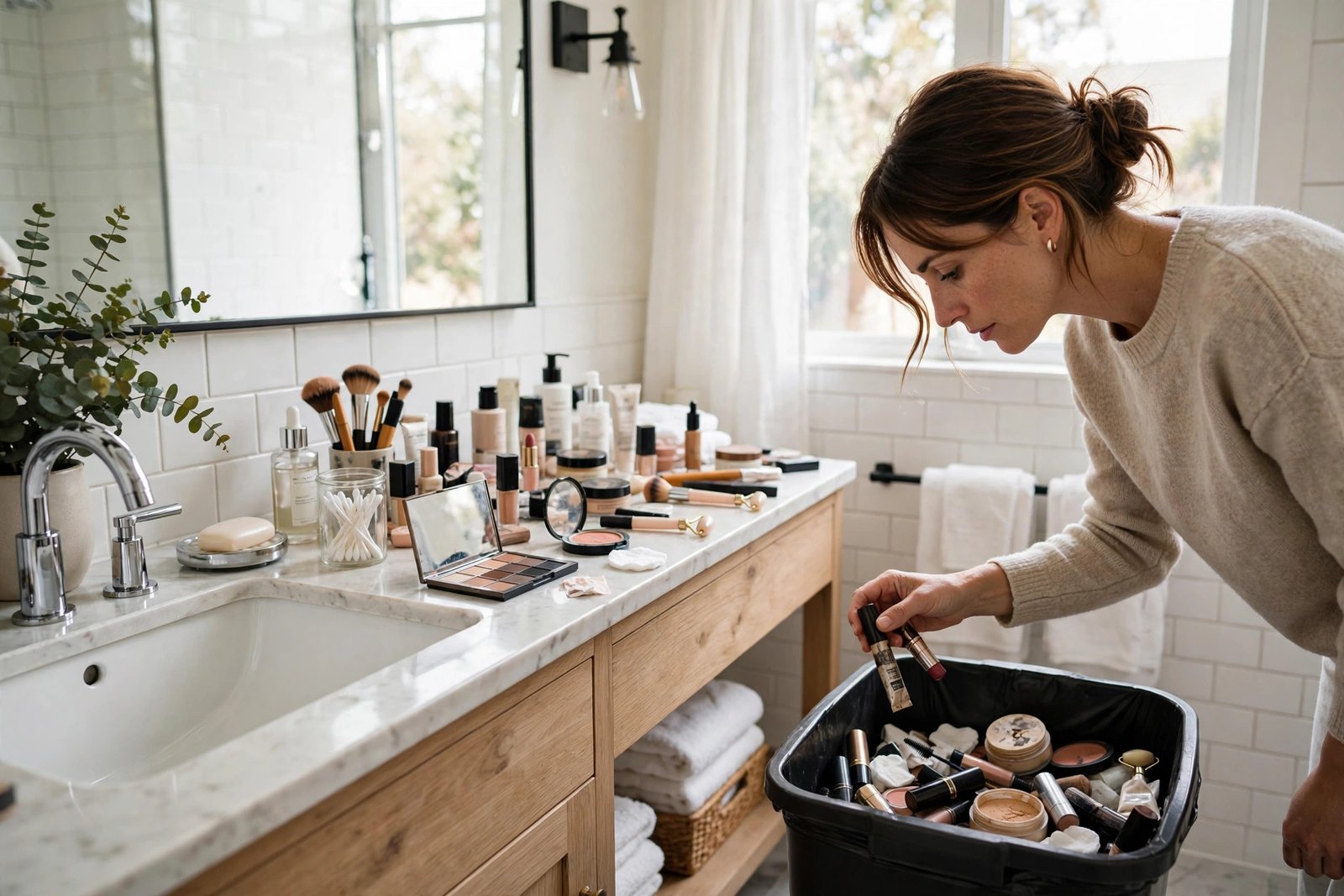
That lipstick from 2019. The mascara you keep “just in case.” The foundation that smells slightly… off. Makeup expires — not with a printed date like milk, but with real consequences: degraded preservatives let bacteria thrive, separated formulas irritate skin, oxidized products cause breakouts, and old eye products can cause infections. Here is exactly when to throw away every category of makeup.
Why Makeup Expires (It’s About Preservatives, Not Magic)
Makeup is a bacteria buffet: water, oils, proteins, and nutrients in a warm, dark container, repeatedly touched by fingers, brushes, and eyelashes. Preservatives hold the line — but they degrade over time, faster once opened and exposed to air. When preservatives fail, bacteria, yeast, and mold colonize the product. The result ranges from skin irritation and breakouts to serious eye infections (mascara-related corneal infections, while rare, are documented and nasty). The AAD’s cosmetic safety tips echo the same rule professionals follow: when a product’s behavior changes, its safety has changed too.
Natural and “preservative-free” products expire fastest — the absence of preservatives is a feature for marketing and a bug for shelf life. Products in jars (fingers in, bacteria in) expire faster than pumps. Anything applied near eyes or on broken skin carries the highest risk. The FDA’s cosmetics guidance explains that while expiration dating is not legally required for most cosmetics, the safety risk of old products is real.
The Expiration Cheat Sheet
Mascara and liquid eyeliner: 3 months — the shortest lifespan of any cosmetic, because the wand shuttles bacteria into the tube with every use and the eye area is the highest-risk zone. Never share, never “pump” the wand (it forces air and bacteria in), and toss at 3 months even if it seems fine. Pencil eyeliner: 1–2 years (sharpening removes the contaminated outer layer, extending life). Eyeshadow: 2 years for powder, 1 year for cream.
Foundation and concealer: 1 year (pump bottles) to 6–12 months (jars, doe-foot tubes — more contamination). Liquid blush/bronzer: 1 year. Powder products (blush, bronzer, setting powder): 2 years — the dry environment inhibits bacteria, making these the longest-lived color cosmetics. Lipstick: 1–2 years; lip gloss: 6–12 months (doe-foot applicators contaminate faster). Lip/eye pencils: 2 years with regular sharpening. Perfume and nail polish do not “spoil” dangerously but degrade in quality — off smells and separated formulas mean toss.
Signs It’s Gone Bad (Regardless of Age)
Trust your senses over the calendar: off or sour smell (especially in foundation, mascara, lip products); separated, curdled, or unusually thick/thin texture; color changes (oxidation darkening beyond normal); irritation or breakouts from a previously fine product (the preservative system has failed); and visible mold (rare but definitive — toss immediately, do not scoop around it). The PAO symbol on packaging — the little open-jar icon with “6M,” “12M,” “24M” — tells you the intended months-after-opening lifespan; it is the closest thing to an expiration date cosmetics offer.
When in doubt, throw it out — the cost of replacing a $12 mascara is trivial against an eye infection or a month of breakouts. This is one area where frugality backfires: stretching expired products is not saving money, it is borrowing skin problems. A periodic makeup audit, like other quick self-care habits, takes 15 minutes twice a year and prevents the slow accumulation of expired products. Mark your calendar for the same weekends you swap seasonal wardrobes — pairing the audit with an existing habit means it actually happens.
Special Cases: When to Toss Immediately
After any eye infection (stye, conjunctivitis): replace all eye makeup used during the infection — mascara, liner, eyeshadow — to prevent reinfection. After a cold sore: replace lip products used during the outbreak. If someone else used your product: eye and lip products are single-user items, full stop — replace or, for pencils, sharpen generously and sanitize. Dropped in questionable places (public bathroom floor): the packaging exterior can be sanitized, but if the product itself contacted the surface, toss it.
Heat-damaged makeup (melted in a hot car): heat degrades preservatives and separates emulsions — if a product melted and re-solidified, its safety margin is compromised. Toss it. This is especially relevant for lipsticks and cream products left in cars during summer.
Making Makeup Last Longer (Safely)
Store cool, dark, and dry — bathrooms are actually the worst storage (heat, humidity, steam degrade everything faster); a bedroom drawer or vanity is better. Close products tightly after every use. Prefer pumps over jars and doe-foots where available. Sharpen pencils before each use. Do not add water or saliva to dried mascara (it introduces bacteria — the product is done). Wash brushes weekly and sponges after every few uses — dirty tools contaminate fresh product. Label opening dates with a marker on the bottom — future you will thank present you.
Buy sizes you will finish: the jumbo foundation is only a deal if you use it within its lifespan — otherwise the “value size” expires half-full. For rarely used shades (that bold lipstick worn twice a year), minis and samples are the rational choice. And rotate seasonally with intention — seasonal skincare adjustments are a natural moment to audit the makeup bag too.
Conclusion
Mascara and liquid liner: 3 months. Foundations and concealers: 6–12 months. Powders: 2 years. Lipsticks: 1–2 years. Trust the PAO symbol, your nose, and your skin over any calendar — off smells, separation, and new irritation mean toss immediately, regardless of age. Replace eye products after infections, store everything cool and dry, and audit twice a year. Makeup is cheaper than the skin problems expired makeup causes.
Set a phone reminder for six months from today: makeup audit. Open every drawer, check every PAO symbol, sniff every mascara, and toss without mercy. Your skin will notice the difference within weeks — fewer mystery breakouts, less irritation, and products that actually perform. Fifteen minutes, twice a year — that is the entire maintenance cost.
Your makeup bag should earn its space — if a product is expired, separated, or untouched for a year, it has already told you its answer.
Frequently Asked Questions
Can old mascara really cause eye infections?
Yes — the wand introduces bacteria into the tube with every use, and degraded preservatives stop controlling it. Mascara-related eye infections including styes and conjunctivitis are well documented. Three months, then toss — no exceptions.
What does the PAO symbol mean?
Period After Opening — the open-jar icon with a number like “12M” indicates how many months the product is intended to last after first opening. It is the cosmetic industry’s standard lifespan guide.
Is it safe to use expired powder eyeshadow?
Lower risk than liquids (dry environments inhibit bacteria), but degraded binders can irritate eyes, and old powders harbor accumulated brush bacteria. Past 2 years, replace — especially for eye products.
Can I sanitize old makeup instead of throwing it away?
Partially: sharpen pencils, wipe lipstick surfaces with alcohol, scrape the top layer of pressed powders and sanitize with alcohol spray. But you cannot restore degraded preservatives — sanitizing extends safe use modestly, it does not reset the clock.
Do unopened products expire?
Yes, more slowly — typically 2–3 years unopened in cool, dark storage. Heat accelerates degradation even sealed. Check for off smells and separation on first opening regardless of purchase date.