
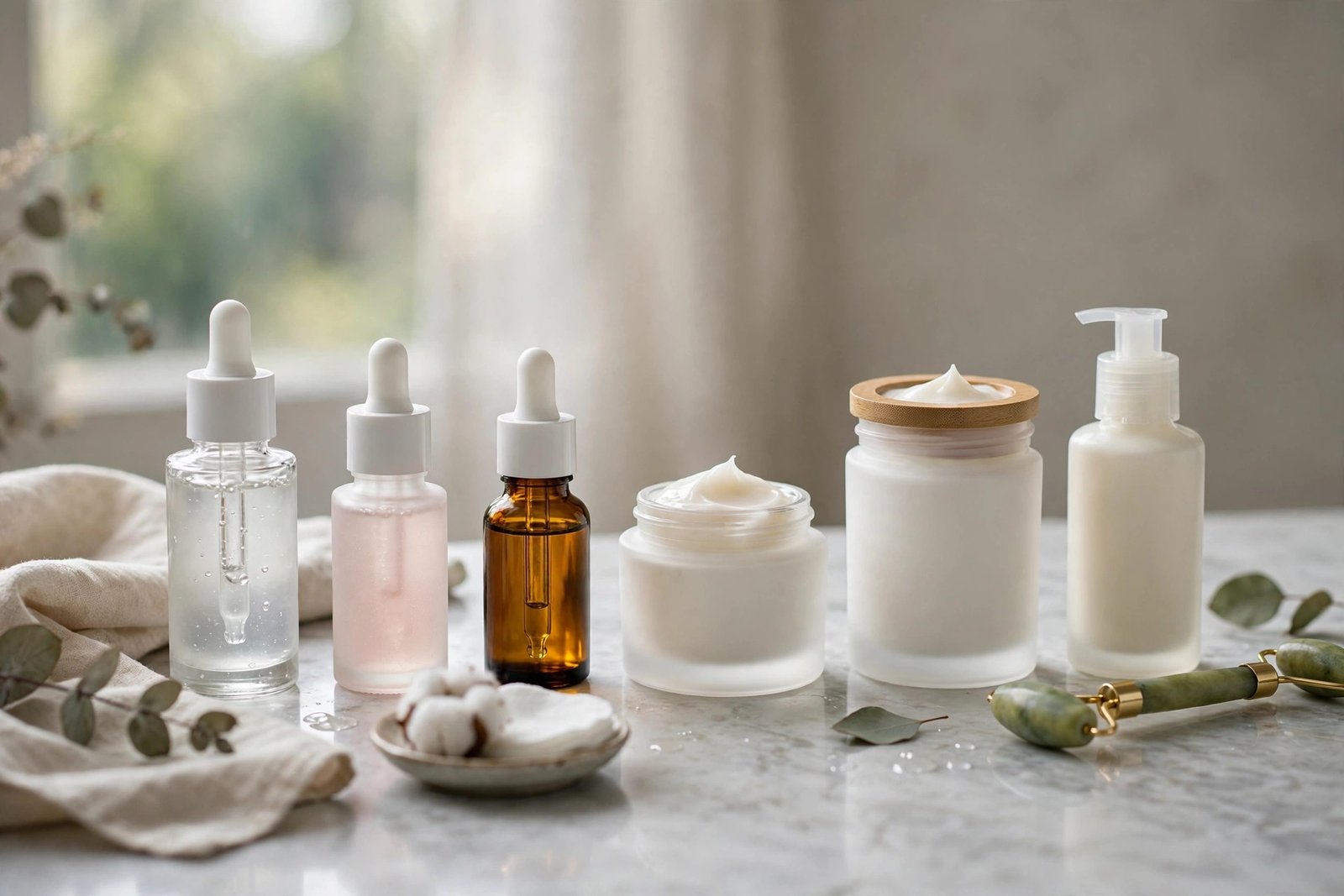
You have the cleanser, the toner, the serum, the moisturizer, the sunscreen — and no idea which goes on first. Layering skincare in the wrong order does not just waste product; it can render expensive actives useless (trapped under an occlusive they cannot penetrate) or irritate your skin (acids layered wrong). The correct order follows one simple principle: thinnest to thickest, with a few critical exceptions. Here is the definitive guide.
The Golden Rule: Thin to Thick
Skincare products are formulated at different molecular weights and viscosities. Light, water-based formulas penetrate skin easily; heavy creams and oils form occlusive barriers that block what is underneath. So the universal order: apply the thinnest, most watery products first, and the thickest, most occlusive last. A heavy cream applied before a serum seals the skin — the serum sits on top, useless. This single principle resolves 90 percent of ordering questions.
The standard morning sequence: cleanser → toner/essence → serum → eye cream → moisturizer → sunscreen. Evening: cleanser (double cleanse if wearing makeup/SPF) → toner/essence → treatment (retinoid or exfoliant) → serum → eye cream → moisturizer → facial oil (optional, last). You do not need every step — a routine with 3–4 well-chosen products in the right order beats 10 products layered randomly. The American Academy of Dermatology’s skincare guidance confirms that order affects how well active ingredients work.
Step by Step: What Each Layer Does
Cleanser first, always — actives cannot penetrate through sunscreen, makeup, and grime. Morning: a gentle cleanse (or just water for very dry skin). Evening: double cleanse — an oil-based cleanser to dissolve makeup and SPF, then a water-based cleanser to clean skin. Toner/essence next: modern toners are treatment delivery vehicles (hydrating, exfoliating, or calming), not the alcohol astringents of the past — apply to damp skin for better absorption.
Serums are the workhorses: concentrated actives (vitamin C, niacinamide, hyaluronic acid, peptides) in lightweight bases designed to penetrate. If using multiple serums, apply thinnest first — typically water-based before oil-based, and pH-dependent actives (vitamin C, AHAs) before neutral ones. Eye cream goes before moisturizer (the delicate eye area gets its treatment before the heavier face cream migrates). Moisturizer seals in everything beneath it. Sunscreen is always last in the morning — it needs to form an even film on top of everything to protect properly. Makeup goes over sunscreen.
The Exceptions That Matter
Retinoids: apply to dry skin after cleansing (or after a light moisturizer buffer if you are sensitive — the “sandwich method”: moisturizer, retinoid, moisturizer). Applying retinoids to damp skin increases penetration and irritation. Wait 30–60 seconds between retinoid and next layer. Chemical exfoliants (AHAs/BHAs): apply after cleansing on dry skin, and do not layer multiple strong actives — retinoid and exfoliating acid on the same night is irritation roulette for most skin. Alternate nights instead.
Facial oils go last (or mixed into moisturizer) — they are occlusive and block everything beneath. The exception: oil cleansing, which is a first step. Spot treatments go as early as possible on the specific spot (before moisturizer) so they contact skin directly. And vitamin C (L-ascorbic acid) prefers a bare face after cleansing in the morning — its low pH works best without competition, followed by a brief wait before the next layer.
Morning vs. Evening: Different Jobs
Morning routine protects: antioxidant serum (vitamin C neutralizes free radicals from UV and pollution), moisturizer, and sunscreen — the non-negotiable. A complete morning routine can be three steps: cleanse, vitamin C serum, moisturizer/SPF. Do not use retinoids or strong exfoliants in the morning — they increase sun sensitivity and degrade in sunlight. The NIH’s skin health information underscores why daytime antioxidant protection matters as much as nighttime repair.
Evening routine repairs: this is when treatment actives (retinoids, exfoliants, peptides) do their work, because skin’s repair processes peak overnight and there is no UV interference. Double cleanse, treat, nourish, seal. Night creams are just richer moisturizers — the “night” label is marketing, but the richer texture suits skin that is not about to face the day. Consistency beats complexity: the same simple routine done daily outperforms an elaborate one done sporadically. Building any routine that sticks borrows from the same psychology as simple self-care habits that take minutes — small, repeatable steps win.
Common Layering Mistakes
The greatest hits of wasted product: applying moisturizer before serum (blocks absorption); layering vitamin C with niacinamide (older advice said they cancel out — modern formulations coexist fine, but the myth persists); using benzoyl peroxide with retinoids simultaneously (they deactivate each other — separate by 12 hours); mixing too many actives at once (irritation, compromised barrier, then blaming the products); applying products to bone-dry skin when humectants (hyaluronic acid) need moisture to grab — in dry climates, hyaluronic acid on dry skin can actually pull water out of skin; and the classic: buying a 10-step routine before mastering cleanse-moisturize-protect. If your skin is suddenly misbehaving, the culprit is often the routine itself — cold-weather skin struggles especially punish overcomplicated layering.
How Long to Wait Between Layers
The internet obsesses over wait times; the reality is simpler. General rule: 30–60 seconds between layers — enough for the previous product to absorb slightly, not fully dry. pH-dependent actives (vitamin C, exfoliating acids) benefit from a slightly longer wait (a few minutes) before the next layer. Retinoids: apply to fully dry skin, wait a minute, continue. Everything else: no stopwatch needed. If you are pilling (products balling up), you are applying too much, layering incompatible textures (silicone over water without absorption time), or rushing — use less product and wait a beat.
Conclusion
Apply skincare thinnest to thickest: cleanser, toner, serum, eye cream, moisturizer, sunscreen (mornings) — with retinoids and exfoliants on dry skin at night, oils last, and spot treatments early. Morning protects, evening repairs. Avoid stacking strong actives, give pH-dependent products a moment, and remember that a simple routine in the right order beats a complex one layered wrong. Your products can only work if they reach your skin in the right sequence.
Frequently Asked Questions
Can I use vitamin C and retinol together?
Yes, but separated: vitamin C in the morning (antioxidant protection), retinol at night (repair). Using both at once increases irritation risk without added benefit. This split also matches each ingredient’s ideal conditions.
Where does sunscreen go in the routine?
Always last in your morning routine, after moisturizer, before makeup. Sunscreen needs to form an uninterrupted film on the skin’s surface — anything applied over it disrupts protection.
Do I really need a toner?
No — toner is optional. Modern hydrating or exfoliating toners add benefit, but cleanser → serum → moisturizer → SPF covers the essentials. Add toner only if it serves a specific purpose in your routine.
Should I apply skincare to damp or dry skin?
Damp for hydrating products (toners, hyaluronic acid serums — they need water to hold). Dry for retinoids and exfoliating acids (damp skin increases penetration and irritation). Cleanser on dry or damp per the product’s instructions.
How do I layer two serums?
Thinnest first, and pH-dependent (vitamin C, acids) before neutral (niacinamide, peptides). When in doubt, apply the one targeting your primary concern first. Wait 30–60 seconds between them.